


Last Updated on August 6, 2026 by Joy Editors
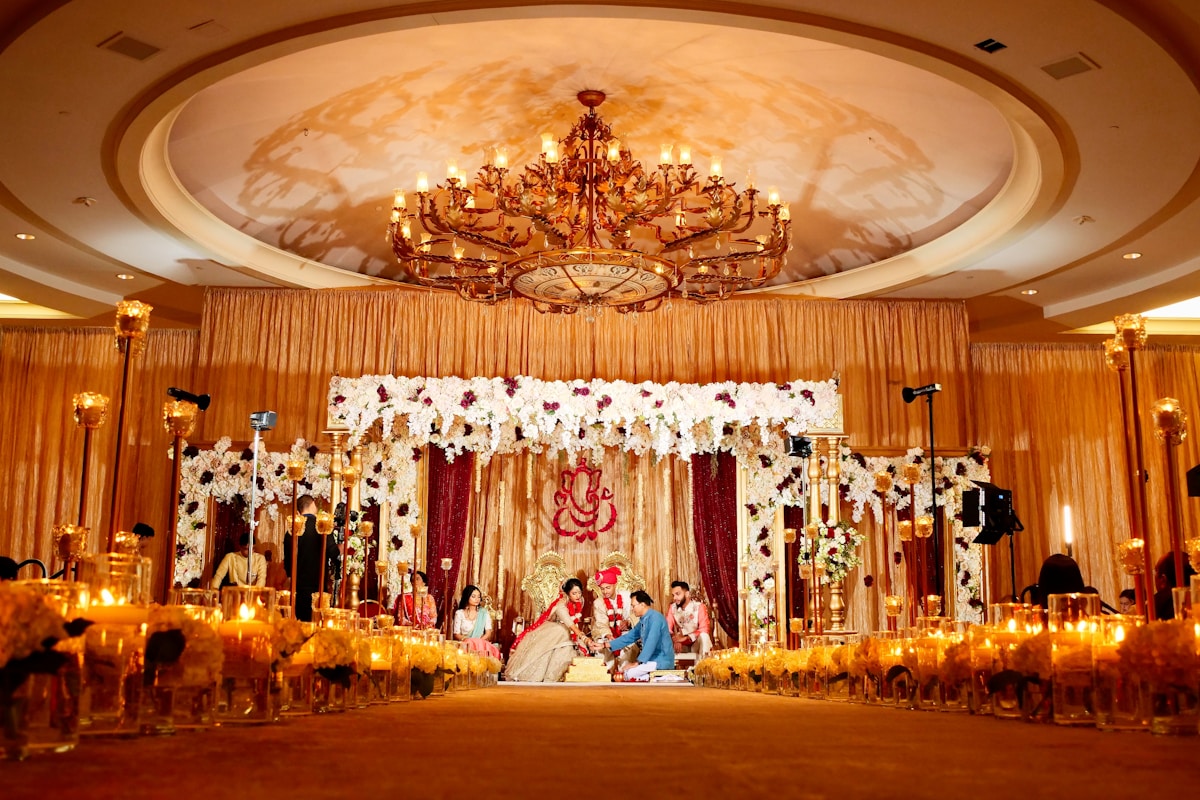
A bilingual wedding website shows your wedding details in two or more languages so every guest can read everything in the language they are most comfortable with. The most reliable method is tag-based page visibility: you duplicate pages for each language, assign each guest a language tag, and the site shows them only their version. Some platforms offer this for free, including language-specific RSVP questions.
Why a Bilingual Wedding Website Matters
Say one side of the family speaks Spanish and the other speaks English. Both sides are excited, but half your guest list lands on an English-only site and has to puzzle through ceremony times, dress code notes, and hotel booking links in a second language. Details get missed. Questions pile up in your inbox.
A bilingual site removes that friction. Each guest sees event details, RSVP forms, and travel information in their own language from the first click. The need is growing, too. More couples today marry across cultural and linguistic lines, and destination weddings in Mexico, Italy, Greece, France, and Portugal bring together guest lists that span multiple languages by default.
Here are the most common situations where building in two languages pays off:
- Intercultural couples whose families speak different primary languages, such as English and Korean, English and Spanish, or English and Hindi
- Destination weddings abroad where local guests and traveling guests may not share a language
- First-generation immigrants with parents or grandparents who are more comfortable reading in their native language
- International guest lists that include friends and family from multiple countries
- Ceremonies blending cultural traditions where guests from one side may need extra context about unfamiliar customs
The most common language pairs are English and Spanish, English and French, English and Italian, English and Portuguese, English and Korean, English and German, English and Arabic, and English and Mandarin. The setup process works the same way regardless of which combination you need.
Beyond the practical upside, a bilingual site signals care. When someone can read RSVP instructions, travel details, and event schedules in their own language, they feel welcomed before they even board a plane.
How to Set Up a Wedding Website in Multiple Languages
The whole process rests on one feature: tag-based page visibility. You tag each guest with their preferred language, and the site automatically shows them only the pages written in that language. No coding required. Most couples finish the full setup in an afternoon.

Build your site in your primary language first. Then duplicate the pages that need translation and rewrite them in the second language. A Spanish-speaking guest will see “Nuestra Historia” and “Horario” in the navigation. An English-speaking guest will see “Our Story” and “Schedule.” Pages that do not need translation, like a photo gallery, stay visible to everyone. You can also tailor RSVP questions by language group so each side gets meal options, transportation questions, and event details that are relevant to them.
This approach scales to any number of languages and works with any script, including Korean, Arabic, and Cyrillic. It is completely free on platforms like Joy.
For the full step-by-step walkthrough, visit our help guide on setting up your website for guests in multiple languages.
Comparing Multilingual Wedding Website Platforms
Not every platform handles multiple languages the same way. Some offer true per-guest language controls. Others require manual workarounds or charge a premium for bilingual features. Here is how the most popular options stack up.
| Platform | Per-Guest Language | Translated RSVP | Page Duplication | Non-Latin Scripts | Price |
|---|---|---|---|---|---|
| Joy | Yes (tag-based) | Yes (custom questions per group) | Yes | Yes (any Unicode script) | Free |
| WedSites | Yes | Yes | Yes | Yes | ~$99 (Pro plan) |
| LumiWed | Yes (magic links) | Yes | Yes (AI auto-translate) | Limited (7 European languages) | Free (2 langs, 50 guests) / €59 |
| Riley & Grey | No | Manual (slash-separated) | No | 14 pre-set UI languages | $299/year |
| Say I Do | No | Yes (6 languages) | No | Limited | Free (basic) |
| The Knot | No | No | No | No | Free |
| Zola | No | Limited | No | No | Free |
Platform Notes
WedSites is the closest feature match to a tag-based approach. It provides a language switcher button, per-guest language assignments, and full page duplication. The tradeoff is cost: multilingual features require the Pro plan at around $99. For couples who want a visual language toggle and do not mind paying, it is a solid alternative.
LumiWed uses machine translation to auto-generate pages in up to seven European languages, and content syncs automatically when you edit the original. The free tier caps at two languages and 50 guests, which may be too tight for larger weddings. Premium is a one-time fee of €59. If your languages fall within the seven supported options and your guest list is small, it is worth a look.
Riley & Grey offers 14 pre-translated UI languages and polished design templates, but there is no true language toggle or per-guest visibility. Couples must write both languages on the same page with slash separators. At $299 per year, the price is hard to justify for limited bilingual functionality.
The Knot and Zola are popular general purpose wedding website builders, but neither has meaningful multilingual support. Couples needing bilingual features will need to look elsewhere.
For couples who need full bilingual support without a paid plan, tag-based visibility offers the most flexibility: per-guest language controls, page duplication, and language-specific RSVP questions at no cost. For a broader look at platform options, see our wedding website comparison.
Tips for Planning a Bilingual Wedding Beyond the Website
The website is one piece. Here are ways to carry that same bilingual care through every guest touchpoint on and around the wedding day.
Bilingual Invitations and Save-the-Dates
Two main routes: print both languages on a single card, or send a separate version to each language group. Digital invitations make the second option cheap and simple. You can design digital invitations in multiple languages and send each version to the right recipients without doubling your stationery budget.
Ceremony Programs
A bilingual order of service lets all guests follow along during the ceremony. Include short explanations of cultural traditions that may be unfamiliar to one side. If your ceremony includes a tea ceremony, a wine box ritual, or specific religious readings, a few lines of context in both languages go a long way.
Signage and Day-of Materials
Think through every surface guests will read: welcome signs, menus, table numbers, escort cards, bar menus. Presenting these in both languages cuts confusion and shows care. For clean layouts, separate languages into distinct sections rather than alternating line by line.
Bilingual Vendors
A bilingual officiant, DJ, or MC can narrate key moments for both sides of the family, from explaining a cultural tradition to announcing the first dance. That single hire can reshape how half your guests experience the day.

Translation Pitfalls to Avoid
Machine translation stumbles on wedding-specific terms. Words like “reception,” “cocktail hour,” “black tie optional,” and dietary labels often translate awkwardly or carry different connotations. Have a native speaker proofread everything before publishing or printing.
If one of your languages uses a non-Latin script such as Cyrillic, Korean (Hangul), Arabic, or Hindi (Devanagari), test your website and printed materials to confirm proper rendering. Not all platforms support right-to-left layouts for Arabic or Hebrew, so verify early.
Pro Tip: Write in complete sections per language rather than alternating sentences. A full page in Spanish followed by a full page in English reads far more naturally than a paragraph-by-paragraph interleave. Tag-based visibility handles this automatically on the website, but keep the principle in mind for printed programs and signage too.
If you are also planning a destination wedding abroad, many of these bilingual considerations overlap with international logistics like travel bookings and local vendor coordination. Our destination wedding planning guide covers those details in depth.
Frequently Asked Questions
How do I create a bilingual wedding website?
Pick a platform that supports per-guest language settings. Build your pages in your primary language first, then duplicate each page and translate the content into your second language. Assign a language tag to each guest so they see only pages in their preferred language. Free platforms with tag-based visibility make this straightforward.
What is the best free platform for a multilingual wedding website?
The strongest free option offers tag-based page visibility, per-guest language assignments, and customizable RSVP questions for each language group. Look for a platform that supports any language and script, including Korean, Arabic, and Cyrillic, with no guest count limits on the free tier.
Can I send RSVP forms in different languages?
Yes. Platforms with per-guest language tagging let you create separate RSVP forms for each language group. You can translate question labels, response options, and even ask different questions based on cultural needs, such as different meal choices or transportation preferences.
Do I need two separate wedding websites for two languages?
No. A single site with tag-based page visibility handles it. Each guest sees only the pages in their assigned language, so the experience feels fully native. You manage everything from one dashboard with one guest list and one set of RSVPs.
Which wedding website platforms support non-Latin alphabets like Korean or Arabic?
Platforms built on Unicode can display any script, including Korean (Hangul), Arabic, Hindi (Devanagari), Cyrillic, Japanese, and Chinese characters. Before committing to a platform, test it by entering text in your target script to confirm it renders correctly on both desktop and mobile.
Ready to build a wedding website that speaks every guest’s language? Start building your free wedding website and set up bilingual pages in minutes.
