

Last Updated on August 6, 2026 by Joy Editors
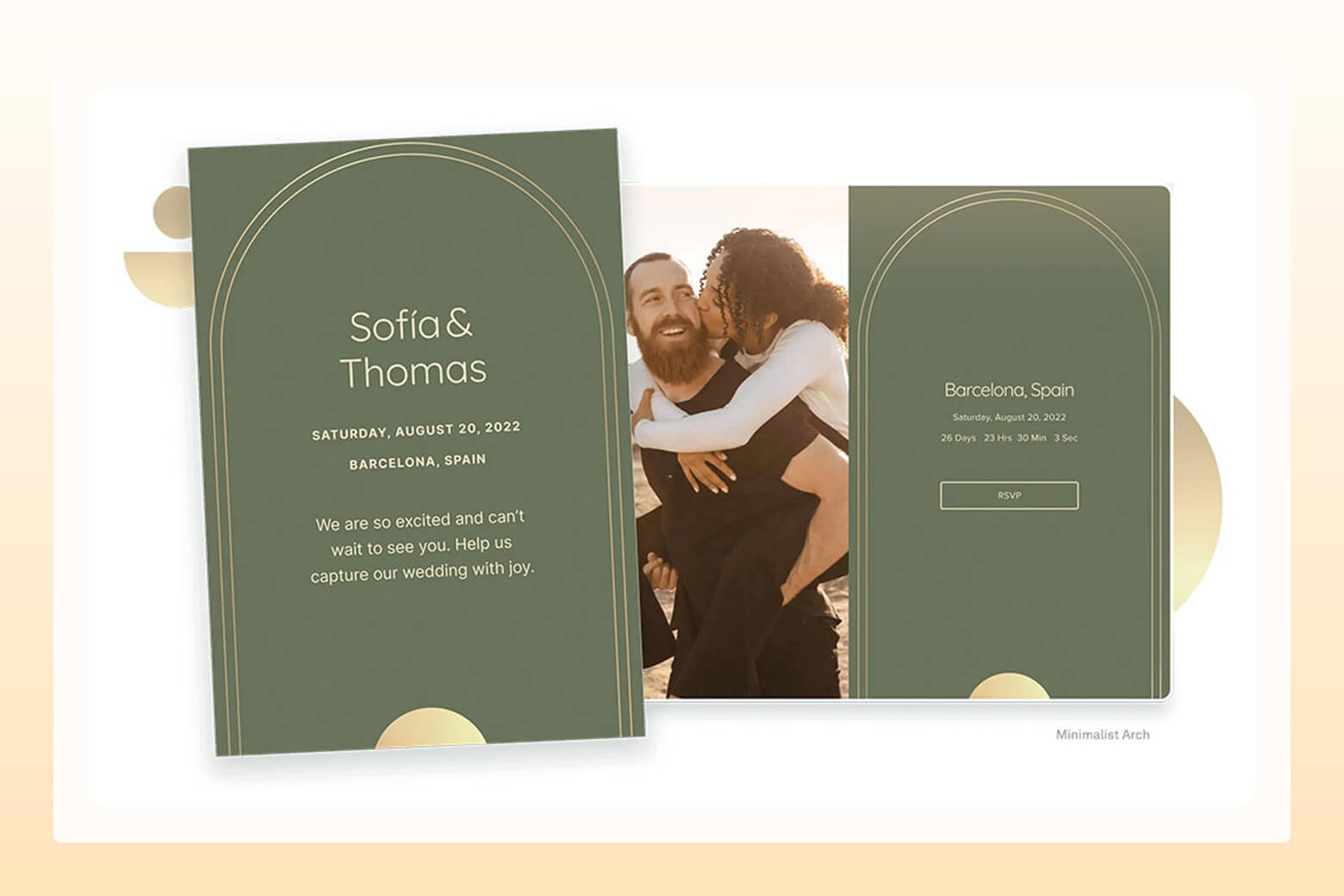
Digital wedding invitations cost $0 to $75 for any guest count, compared to $400 to $1,500 or more for print invitations. Digital formats deliver faster RSVPs, with 80 to 90 percent of responses arriving within two weeks versus 50 to 60 percent for paper. Print suits formal or black-tie events and guests who value keepsakes. Many couples now use a hybrid approach: digital for most guests, printed cards for older relatives or traditional family members
Choosing between digital and print wedding invitations comes down to budget, guest list, timeline, and personal style. Both formats have clear strengths, and neither is universally better. This guide breaks down costs, RSVP rates, etiquette rules, and 2026 trends so you can pick the right format (or combination) for your wedding.
Cost Comparison: Digital vs Print Invitations
Cost is usually the first factor couples weigh, and the gap between digital and print is significant. Digital invitations eliminate printing, postage, and assembly costs entirely. Print invitations require design fees, paper stock, envelopes, RSVP cards, and stamps for both the outgoing and return mail.
Cost by Guest Count
| Guest Count | Digital Invitations | Print Invitations | Savings with Digital |
|---|---|---|---|
| 50 guests | $0 to $50 | $250 to $600 | $250 to $550 |
| 100 guests | $0 to $50 | $500 to $1,000 | $500 to $950 |
| 150 guests | $0 to $75 | $750 to $1,500 | $750 to $1,425 |
| 200+ guests | $0 to $75 | $1,000 to $2,000+ | $1,000 to $1,925+ |
Digital invitations scale for free. Whether you invite 50 or 500 guests, the cost stays flat. Print costs climb with every additional invite because each one requires paper, ink, and a $0.73 first-class stamp (2026 USPS rates).
Hidden Costs of Print Invitations
The sticker price on print invitations rarely tells the whole story. Several additional expenses add up quickly:
- Postage: $0.73 per outgoing invite plus $0.73 per RSVP return envelope. For 150 guests, that is $219 in stamps alone.
- Calligraphy or addressing: $1 to $5 per envelope for professional hand-addressing. Printing addresses costs $0.50 to $1 each.
- Inner envelopes: Traditional suites include inner and outer envelopes, adding $0.50 to $2 per set.
- Weight surcharges: Thick card stock, vellum wraps, or wax seals can push invitations over one ounce, requiring extra postage ($0.24 per invite).
- Assembly time: Stuffing, sealing, and stamping 150 invitation suites takes 3 to 5 hours of labor.
- Extras: RSVP cards ($75 to $200), detail cards ($50 to $150), belly bands or ribbon ($30 to $100).
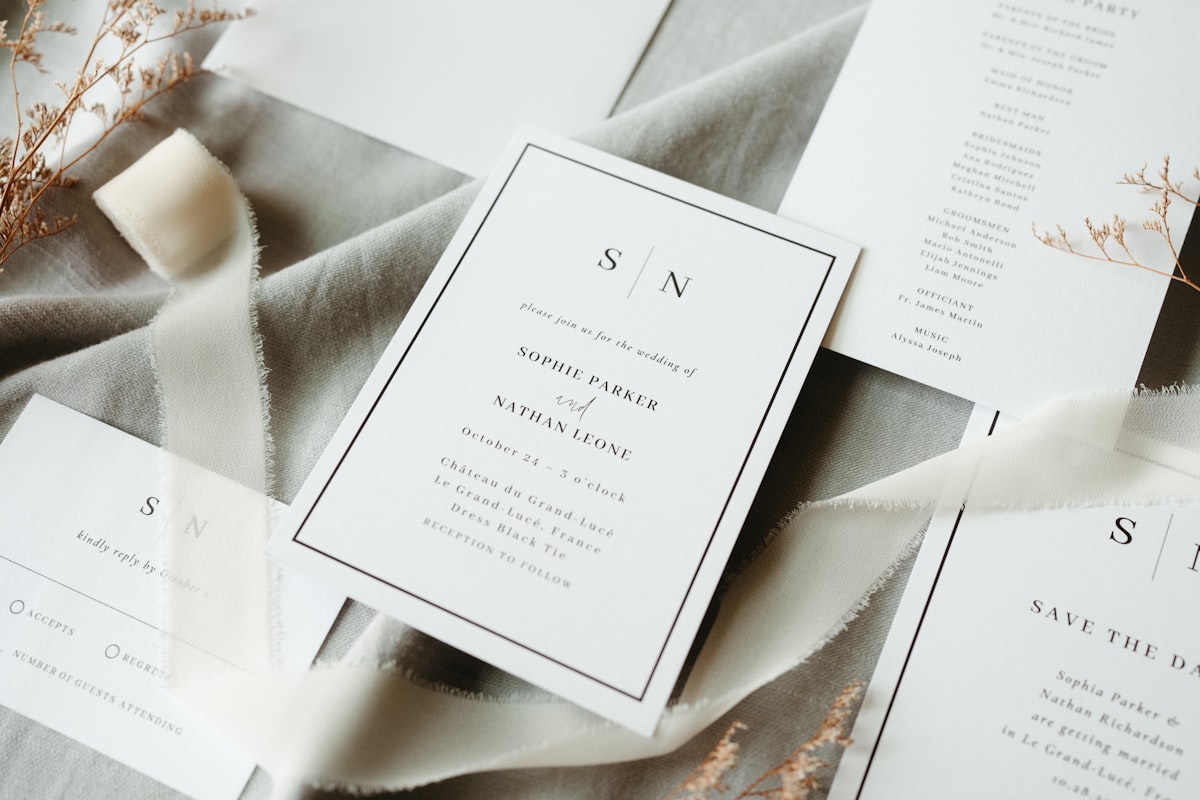
Joy includes free digital invitations, a wedding website, online RSVP tracking, and guest list management at no cost, so couples can handle the entire invitation process without paying for separate tools.
RSVP Response Rates: What the Data Shows
RSVP tracking is where digital invitations pull far ahead of print. Paper RSVP cards rely on guests finding a pen, filling out the card, and mailing it back. That process creates friction at every step.
| Metric | Digital RSVP | Paper RSVP |
|---|---|---|
| Response within 2 weeks | 80 to 90% | 50 to 60% |
| Automated reminders | Yes | No |
| Real-time tracking | Yes | No |
| Meal choice collection | Built in | Separate card needed |
| Plus-one management | Built in | Manual |
| Cost | $0 | $75 to $200+ (cards + postage) |
Sixty-two percent of couples now use digital RSVPs, even when sending printed invitations. Couples using Joy’s built-in online RSVP system can track responses in real time, send automatic reminders, collect meal choices, and manage plus-ones without separate spreadsheets.
Are Digital Wedding Invitations Tacky?
This is the most common concern couples raise, and the short answer is no. Digital invitations are not inherently tacky. The Emily Post Institute confirms that digital wedding invitations are appropriate for all but the most formal events. What matters is execution, not format.
The “tacky” stigma traces back to early digital platforms that were ad-supported, used generic clip-art templates, and looked like they belonged at a children’s birthday party. Modern digital invitations are a different category entirely. Today, couples can choose from custom typography, animated envelope reveals, video elements, and designs that rival high-end print stationery.
What Makes a Digital Invitation Feel Polished
- Custom design that matches your wedding aesthetic (colors, fonts, imagery)
- A personal message rather than a generic template
- A direct link to your wedding website with full event details
- Clean delivery via email or text, not a mass social media post
- RSVP functionality built in, so guests can respond instantly
When Guests Might Expect Paper
- Black-tie or ultra-formal celebrations
- Weddings at historic or traditional venues
- Older relatives (70+) who may not check email regularly
- Cultural or religious ceremonies where printed invitations carry symbolic weight
For most 2026 weddings (casual, semi-formal, or modern formal), digital invitations are widely accepted and often preferred by guests who appreciate the convenience of a one-tap RSVP.
Pros and Cons of Digital Wedding Invitations
Advantages
- Cost: Free to $75 for unlimited guests, saving $400 to $2,000+ compared to print.
- Speed: Send to your entire guest list in minutes rather than weeks.
- RSVP tracking: Real-time responses, automated reminders, built-in meal and plus-one collection.
- Easy updates: Changed a venue or time? Update the invitation instantly with no reprinting.
- Sustainability: No paper, no printing chemicals, no mail truck emissions.
- Guest convenience: Guests tap to RSVP from their phone in under 30 seconds.
- Analytics: See who opened, who clicked, and who has not responded.
Drawbacks
- No physical keepsake: Guests cannot frame or save a digital card the same way.
- Spam filters: Email invitations may land in spam or promotions folders.
- Tech barriers: Elderly guests or those without reliable internet may miss digital invitations.
- Perception: Some guests (particularly older generations) may view digital as less formal.
- Screen fatigue: The average person receives 100+ emails daily, so invitations can get buried.
Pros and Cons of Print Wedding Invitations
Advantages
- Tangible keepsake: Guests can display, frame, or save printed invitations.
- Tactile experience: Letterpress, foil stamping, and specialty papers create a sensory impression that screens cannot replicate.
- Formality signal: A printed suite immediately communicates the tone of your event.
- Universal access: Every guest can receive and read a physical card regardless of tech comfort.
- Design options: Wax seals, vellum overlays, custom illustrations, and hand calligraphy add bespoke touches.
Drawbacks
- High cost: $5 to $15 per guest for a complete suite (design, printing, postage, RSVP cards, envelopes).
- Long timeline: Ordering, proofing, printing, assembling, and mailing takes 8 to 12 weeks.
- No edit option: A typo or venue change means reprinting (and repaying).
- Slow RSVPs: Paper RSVP cards produce lower and slower response rates.
- Lost mail: USPS mail loss rates average 3 percent, meaning some invitations never arrive.
- Environmental impact: A 150-guest wedding uses 360 to 480 pieces of paper for the invitation suite alone.
Etiquette Rules for Each Format
Wedding invitation etiquette has evolved, but a few guidelines still apply regardless of format.
Digital Invitation Etiquette
- Timing: Send 6 to 8 weeks before the wedding, just like paper invitations.
- Delivery method: Use direct email or text. Do not send invitations through social media posts or group chats.
- Individual addressing: Address each invitation to specific guests. Avoid “and guest” when possible; name their plus-one.
- Follow-up: Send one reminder 2 to 3 weeks before the RSVP deadline. Automated reminders handle this seamlessly.
- Include essentials: Host names, couple names, date, time, venue, dress code, RSVP link, and a link to the wedding website.
Print Invitation Etiquette
- Timing: Mail 6 to 8 weeks before the wedding (10 to 12 weeks for destination weddings).
- Return address: Include on the outer envelope, not the RSVP envelope.
- RSVP card: Include a stamped, pre-addressed return envelope for the RSVP card.
- Formal addressing: Use full names and proper titles on outer envelopes.
- Enclosures: Include direction cards, accommodation cards, or reception cards as needed.
Cultural and Religious Considerations
Some traditions place special significance on printed invitations. Hindu weddings often include a Ganesh symbol on the invitation, with parents listed as hosts. Jewish wedding invitations traditionally include Hebrew text. Catholic invitations may reference the Nuptial Mass. In these cases, printed invitations may be the more respectful choice, though a hybrid approach (printed for the ceremony community, digital for broader guests) works well.
When Print Is Still the Right Choice
Print invitations make the most sense in specific scenarios:
- Black-tie or ultra-formal weddings: The weight and texture of a printed invitation sets the tone for a formal affair.
- Small guest lists (under 50): The cost per invite is more manageable, and the personal touch stands out.
- Older guest demographics: If a large portion of your guest list is 65+, physical mail is more reliable.
- Religious or cultural traditions: When printed invitations carry ceremonial significance.
- Keepsake priority: If you or your families value having a physical memento of the occasion.
- Generous stationery budget: If your budget comfortably accommodates $1,000+ for invitations.
When Digital Works Best
Digital invitations are the stronger choice in these situations:
- Large guest lists (100+): Costs stay flat no matter how many people you invite.
- Tight timelines: Need to send invitations in days, not weeks? Digital is instant.
- Destination weddings: International postage is expensive and unreliable. Digital invitations arrive anywhere in seconds.
- Budget-conscious couples: Redirect $500 to $1,500 in stationery savings toward the venue, photographer, or honeymoon.
- Eco-minded couples: Eliminate paper waste and reduce the carbon footprint of your wedding.
- Tech-savvy guest lists: Younger guests often prefer the convenience of digital RSVPs.
- Frequent updates: If details like venue or timing may shift, digital allows instant edits.
The Hybrid Approach: Best of Both Worlds
The hybrid approach is the fastest-growing trend in wedding invitations for 2026. Rather than choosing one format exclusively, couples send digital invitations to most of their guest list and printed invitations to a smaller group.
How to Execute a Hybrid Approach
- Split your guest list. Identify 15 to 30 guests who would appreciate a printed invitation: grandparents, older relatives, parents’ close friends, VIPs.
- Match the design. Use the same color palette, fonts, and layout for both formats so the invitations feel cohesive.
- Use digital RSVP for all guests. Even print recipients can scan a QR code printed on their invitation to RSVP online. This keeps all responses in one tracking system.
- Send print first. Mail printed invitations one week before sending digital ones, since postal delivery takes longer.
- Track everything in one place. Use a single guest list manager to monitor responses from both formats.
A hybrid approach reduces print costs by 80 percent (printing 25 invitations instead of 150) while ensuring no guest is excluded. Joy lets couples combine digital invitations with printable invitation designs while keeping all responses in one guest list management system.
2026 Trends in Wedding Invitations
Wedding invitation trends are shifting rapidly. Here is what is new this year:
- Animated and video invitations: Couples are adding motion to their digital invitations with animated envelope openings, short video introductions, and parallax scroll effects. These create a memorable first impression without adding cost.
- QR codes on print invitations: The bridge between print and digital. A QR code on a printed invitation directs guests to the wedding website for RSVP, directions, and registry links. This eliminates separate RSVP cards and postage.
- AI-assisted design: New tools allow couples to generate custom invitation artwork, monograms, and illustrations based on their wedding theme and color palette.
- Sustainable print options: Seed paper (plantable invitations), recycled card stock, and soy-based inks are growing in popularity for couples who want print with a smaller footprint.
- Coordinated digital suites: Save-the-dates, invitations, RSVP reminders, and day-of schedules all matching in a unified digital design system.
| Platform | Starting Price | RSVP Tracking | Reminders | Website | Guest List | Meal Preferences | Print + Digital | Best For |
|---|---|---|---|---|---|---|---|---|
| Joy | Free (basic) | Yes | Yes | Yes | Yes | Yes | Yes | Best Overall |
| Paperless Post | $0.50 to $3 per card | Yes | No | No | No | No | No | Premium designs |
| Greenvelope | $19+ per event | Yes | Yes | No | No | No | No | Eco-focused branding |
| Zola | Free (basic) | Yes | Yes | Yes | Yes | Yes | No | All-in-one planning |
| Evite | $17.99 to $99.99 | Yes | Yes | No | No | No | No | Casual events |
When comparing platforms, look for three features: built-in RSVP tracking with automated reminders, integration with a wedding website, and flexible design customization. Free options that include all three eliminate the need to pay for separate tools.
Environmental Impact: Digital vs Print
Sustainability is a growing priority for couples planning 2026 weddings. The environmental difference between digital and print invitations is measurable.
- Paper usage: A 150-guest wedding suite (invitation, envelope, RSVP card, RSVP envelope, detail card) uses 360 to 480 individual pieces of paper.
- Carbon footprint: Print invitations generate emissions from paper manufacturing, ink production, and postal delivery. The USPS fleet drives approximately 1.2 billion miles annually.
- Digital footprint: Sending 150 emails generates roughly 9 kg of CO2 equivalent, compared to an estimated 50 to 150 kg for print production and mailing.
- Eco-friendly print alternatives: Seed paper, recycled stock, and soy inks reduce the impact by 30 to 50 percent but still carry a higher footprint than digital.
For couples who want to minimize their wedding’s environmental impact, digital invitations offer the clearest path. Explore more eco-friendly invitation ideas to find the right balance between style and sustainability.
What to Include in Your Invitations
Regardless of format, every wedding invitation should include these essential details:
- Host line: Who is inviting (couple, parents, or both)
- Couple names: Full names of both partners
- Date and time: Day of the week, date, and ceremony start time
- Venue name and address: Full location with city and state
- RSVP instructions: Deadline and method (link, email, or mail-back card)
- Dress code: Black tie, cocktail, garden party, casual
- Wedding website link: Direct guests to full event details, registry, travel info, and accommodations
Digital invitations make it easy to include all of this in a single, scrollable design. Print invitations may need separate enclosure cards for details like directions, accommodations, and registry information.
Common Mistakes to Avoid
- Sending digital invitations via social media: A Facebook event or Instagram DM does not communicate the importance of a wedding. Use direct email or text.
- Forgetting a test send: Always send yourself a test invitation to check formatting, links, and spelling before the full send.
- Skipping the RSVP deadline: Without a clear deadline, responses trickle in for months. Set a firm date 3 to 4 weeks before the wedding.
- Assuming all guests prefer one format: A 25-year-old and a 75-year-old have different communication preferences. Consider their needs individually.
- Over-designing print invitations: Heavy embellishments increase postage costs and can make text harder to read.
- Not collecting addresses early: For print invitations, start gathering mailing addresses 3 to 4 months before your send date.
Which Format Is Best for Your Wedding?
Use this quick-reference table to match your situation with the right invitation format:
| Your Situation | Best Format | Why |
|---|---|---|
| Budget under $500 for stationery | Digital | Free to $75 for any guest count |
| 100+ guests | Digital or hybrid | Print costs exceed $1,000 |
| Under 50 guests | Print or hybrid | Cost is manageable, personal touch matters |
| Black-tie or ultra-formal | Printed stationery signals formality | |
| Casual or modern wedding | Digital | Matches the event tone and saves money |
| Destination wedding | Digital | Avoids international postage and delays |
| Mixed-age guest list | Hybrid | Print for older guests, digital for everyone else |
| Tight timeline (under 6 weeks) | Digital | Instant delivery, no printing lead time |
| Eco-conscious priorities | Digital | Eliminates 360 to 480 pieces of paper |
| Keepsake or heirloom priority | Physical card can be framed and saved |
Frequently Asked Questions
Is it tacky to send digital wedding invitations?
No. The Emily Post Institute and modern etiquette experts confirm that digital wedding invitations are appropriate for casual, semi-formal, and most formal weddings. The key is choosing a polished design, sending individually (not via social media), and including all essential details. The only events where paper is still strongly expected are black-tie galas and ceremonies rooted in specific cultural or religious traditions.
How much do digital wedding invitations cost compared to print?
Digital invitations range from $0 to $75 regardless of guest count. Print invitations cost $5 to $15 per guest when including design, printing, envelopes, RSVP cards, and postage. For a 150-guest wedding, that means $0 to $75 for digital versus $750 to $1,500 for print.
Can I use digital RSVPs with printed invitations?
Yes. This is one of the most popular hybrid strategies for 2026. Print a QR code on your invitation or RSVP card that directs guests to an online RSVP page. You get the tactile elegance of paper with the tracking efficiency of digital. More than 62 percent of couples already use online RSVPs regardless of invitation format.
When should I send wedding invitations?
Send invitations 6 to 8 weeks before the wedding for both digital and print formats. For destination weddings, send 10 to 12 weeks in advance. Save-the-dates should go out 6 to 8 months before the wedding date. Digital invitations can be sent on a tighter timeline if needed because there is no postal transit time.
What should I include in a digital wedding invitation?
Include the host names, couple names, date and time, venue name and address, dress code, RSVP link with a deadline, and a link to your wedding website. Digital invitations can also include interactive maps, accommodation details, and links to your registry, all in a single design.
Do older guests accept digital invitations?
Most adults under 65 are comfortable with digital invitations. For guests over 70 or those with limited internet access, consider the hybrid approach: send printed invitations to that smaller group while using digital for the rest. You can also follow up with a phone call to confirm they received and understood the details.
