

Last Updated on September 14, 2026 by Joy Editors
Foil wedding invitations use a metallic finish, most often gold, silver, or rose gold, applied through hot foil stamping or flat digital foil printing. Foil stamping presses a thin metallic layer into the paper for a raised, reflective texture, while flat foil creates the same shiny look without texture and typically costs less. Gold foil reads as the most formal choice, making these invitations a popular pick for black-tie and evening weddings.
A foil wedding invitation is often the first physical object a guest holds that tells them what kind of wedding to expect. Catch the light on a gold-stamped monogram or a silver deco border, and the tone is set before anyone opens the envelope. That said, “foil” covers a wider range of looks and price points than most couples realize, from a full metallic wash across the card to a single thin line of gold along the edge.
This guide walks through real gold, silver, and metallic invitation designs, explains how foil stamping differs from flat foil printing, and covers what foil actually costs, how long it takes to order, and how to match a metallic finish to your wedding’s formality.
9 Gold, Silver, and Metallic Invitation Designs Worth Considering
Every design below is available with a real foil finish, from full botanical wreaths to minimal corner frames. Each is available to order as printed cards or to send as a digital invitation, so you can preview the exact design before committing to a print run.
Vintage Porcelain Foil
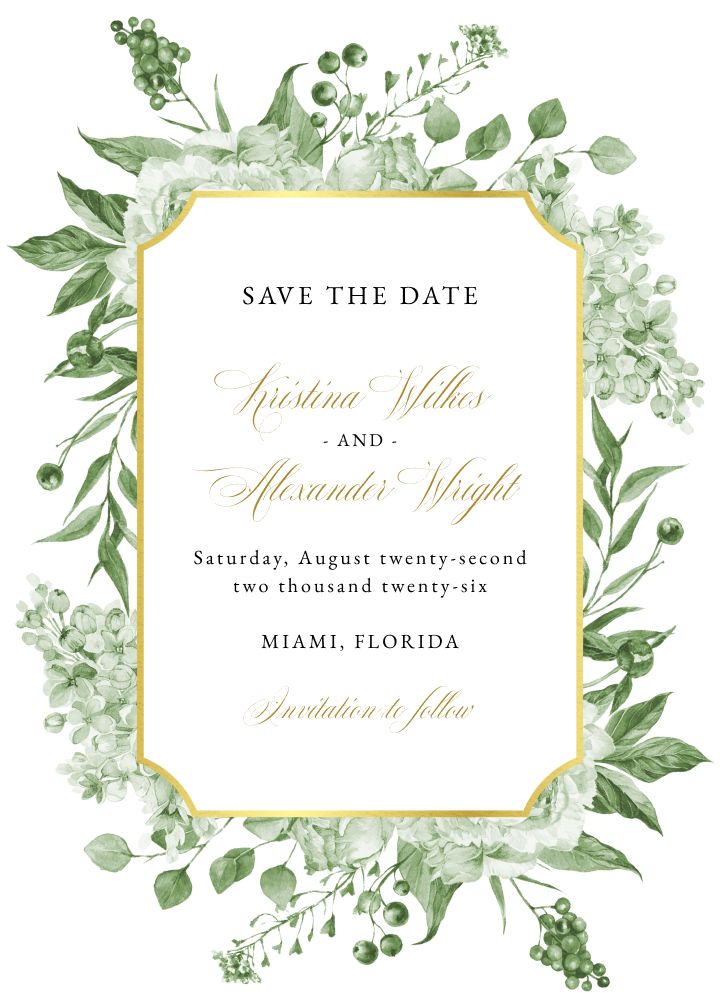
A leafy painted wreath held inside a slim gold foil frame. Soft and botanical, it brings foil to a garden wedding without going formal-dark.
Interlocked Foil
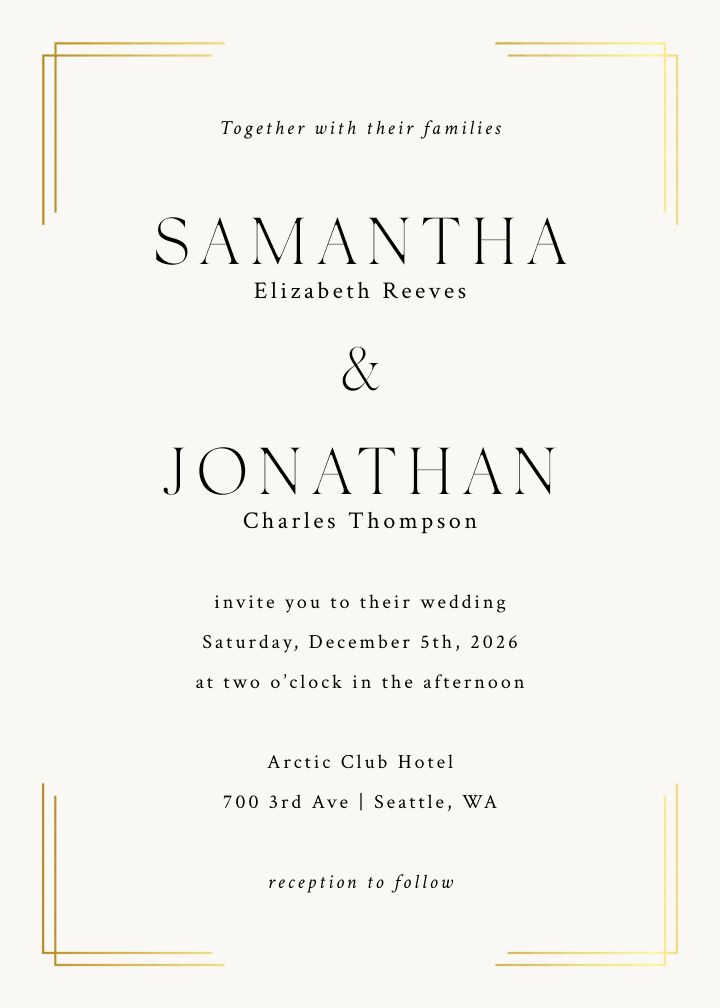
Interlocking gold corner frames on a cream card, an architectural look that suits a modern formal venue. One of the cleanest ways to wear foil.
Gilded Maple Foil
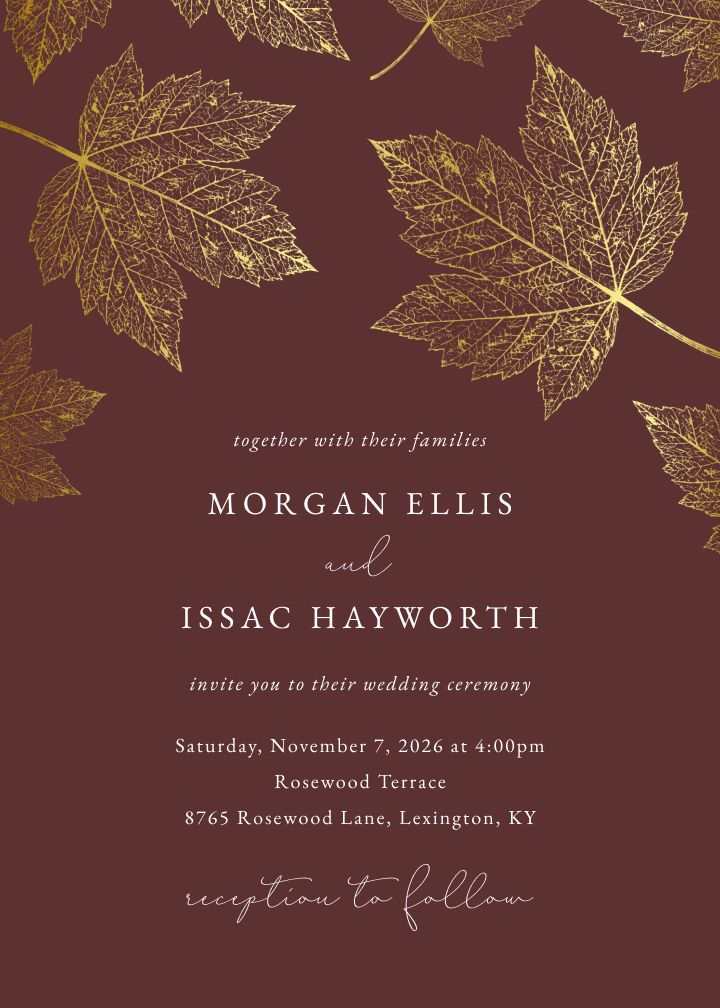
Gold maple leaves scattered over a deep burgundy background. The obvious pick for a fall wedding that wants both the season and the shine.
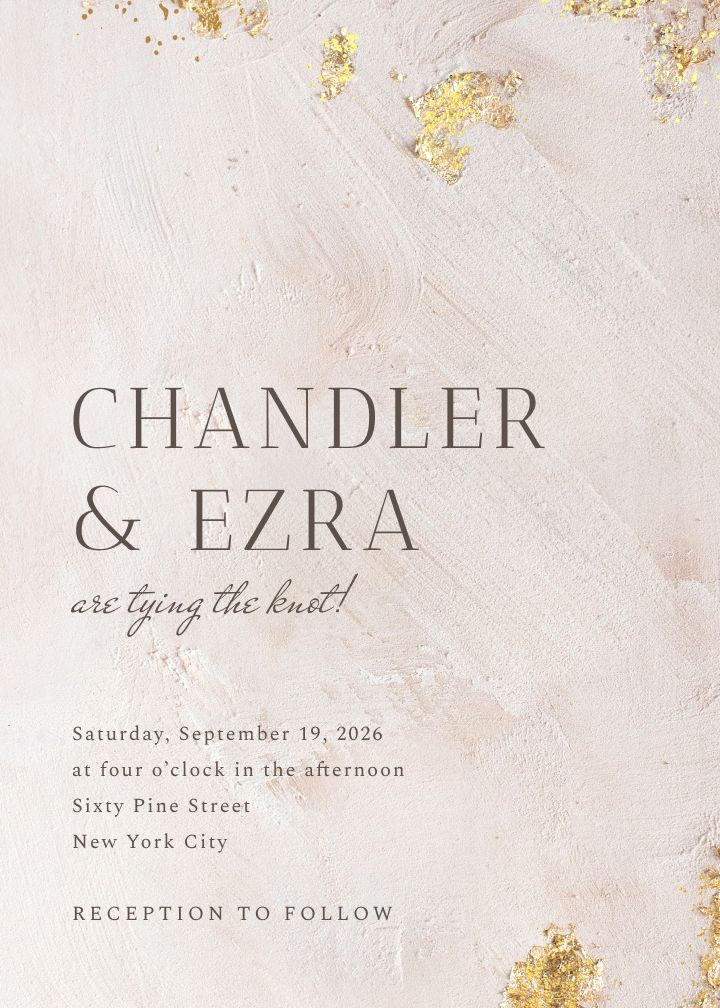
Cherie Foil
Gold foil flecks drift across a blush background like confetti. Romantic and light, a good foil option for a daytime or garden celebration.

Arch II Foil
A gold foil arch frames a full-photo background. Made for couples who want to lead with an engagement photo and keep the foil as the frame.
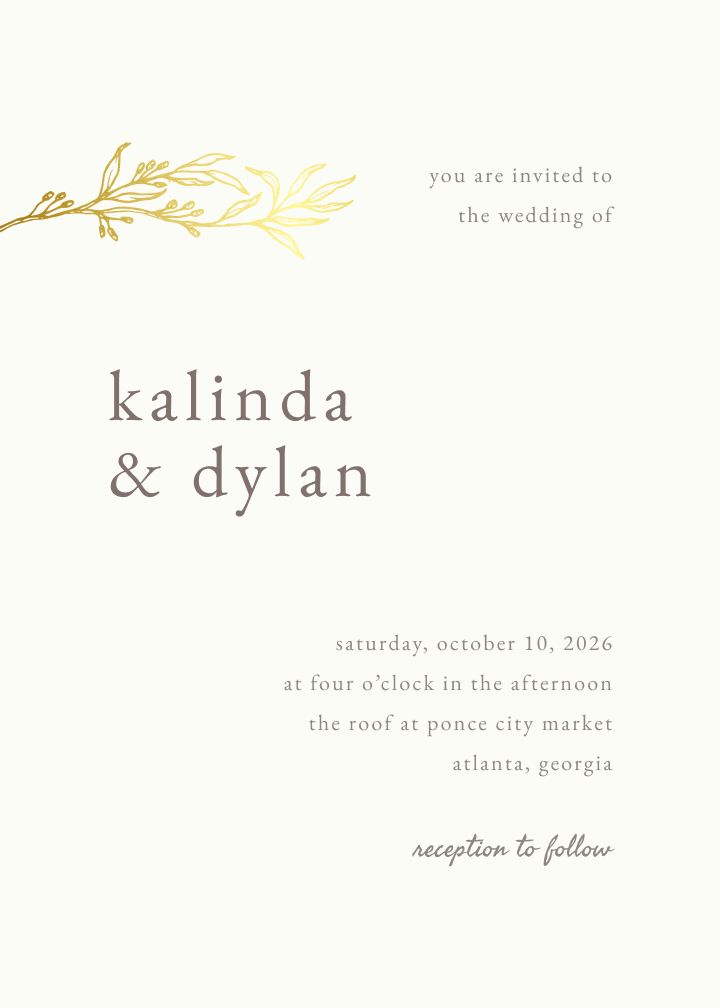
Rustic Chic V Foil
A single gold botanical sprig on cream with lowercase type. Understated and warm, foil for a barn or backyard wedding without any formality overhead.
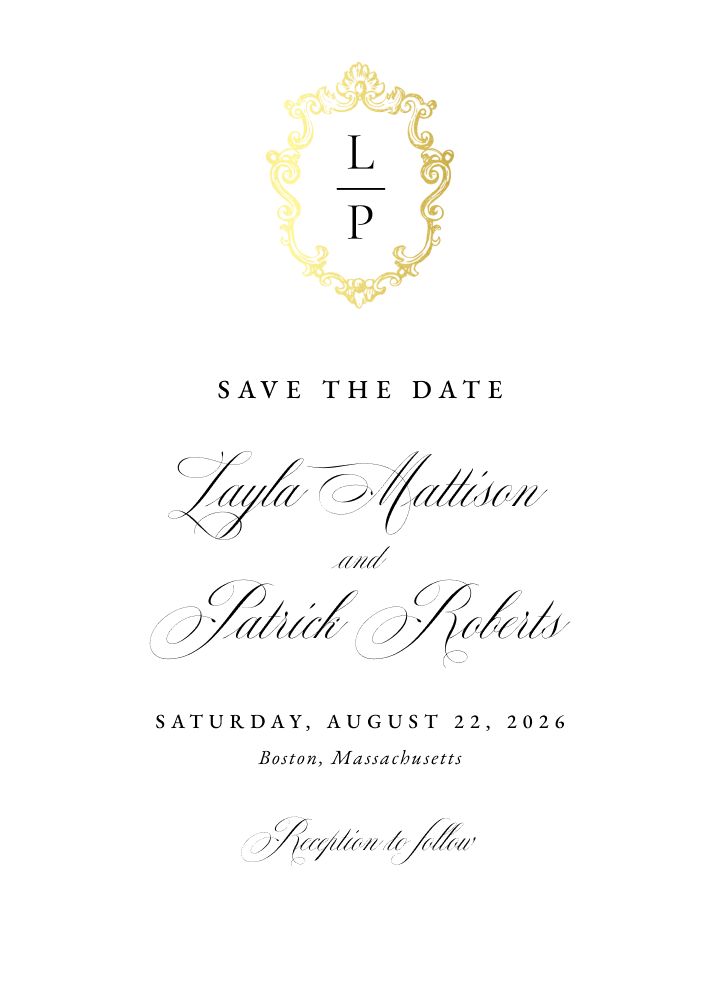
Classical Crest Foil
A gold foil monogram crest over formal script. Traditional and heraldic, suited to a classic church ceremony or a family-estate venue.
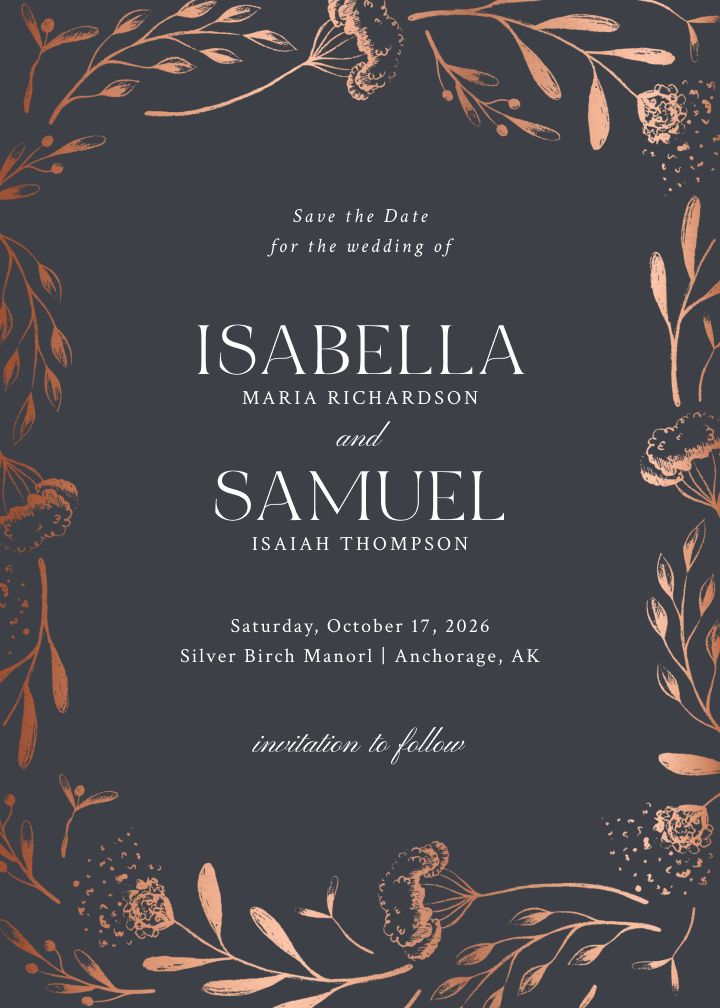
Harvest Wreath Foil
A copper-toned wreath on a dark ground, rich and autumnal. Pairs naturally with a fall date and a candlelit reception.

Maison Foil
Blue floral toile framing with gold accents, a French-country look. Distinct from everything else in this list, and a strong match for a garden estate.
Foil Stamping vs. Flat Foil: What Is the Difference?
“Foil” is a finish, not a single process, and the two main methods behind it look and feel different in hand. Knowing which one you are looking at helps set the right cost and timeline expectations before you fall in love with a design.
How Foil Stamping Works
True foil stamping uses heat and pressure to press a thin metallic film into the surface of the paper through a custom-made die. This process leaves a slightly raised, tactile texture that you can feel as well as see. Gold is the classic choice, with silver, rose gold, and copper as popular alternatives.
What Flat (Digital) Foil Looks Like Instead
Flat foil, sometimes called digital foil, prints a metallic ink or film onto the paper to create the same shine without the raised texture. It looks smooth to the eye but reads as noticeably flatter to the touch than a true foil stamp.
Which One Costs More, and Why
Foil stamping is generally the pricier of the two because it requires a custom metal die for every unique design, plus setup time on a specialized press. Flat foil skips the die entirely, which is part of why it tends to be the more budget-friendly route to a metallic look.
Choosing the Right Foil Color for Your Wedding
Foil comes in more than gold and silver, and the color you pick changes the entire mood of the suite, from traditional and formal to soft and romantic.
Gold Foil: The Classic, Formal Choice
Gold remains the most popular foil color for weddings, and it is easy to see why: it reads as warm, rich, and unmistakably formal, especially against cream, white, or deep jewel-tone card stock. It is the natural first choice for black-tie invitations, evening receptions, and any wedding leaning into a traditional, elegant aesthetic.
Silver and Rose Gold: Softer, Modern Alternatives
Silver foil brings a cooler, more contemporary edge, and it pairs especially well with art deco motifs, navy or charcoal backgrounds, and winter wedding palettes. Rose gold sits in between gold and silver in tone, offering a soft, romantic shimmer that suits garden weddings and blush-and-neutral color schemes just as well as it suits a formal ballroom.
Copper, Black, and Specialty Foils
Beyond the three most common metallics, copper foil adds warmth with a more rustic or vintage edge, and black foil creates a subtle, matte-on-matte effect for couples who want texture without shine. Specialty options like holographic or white foil also exist for couples who want a design that stands further apart from the traditional metallic look.
Matching Foil Invitations to Your Wedding’s Formality
Foil is not an all-or-nothing decision. How much of it you use, and where, can shift an invitation from a subtle nod to a full formal statement.
Ballroom and Black-Tie Weddings
For a ballroom reception or a black-tie dress code, a fuller metallic treatment, such as a gold-washed border, an art deco frame, or an ornate monogram, matches the formality of the room. Deep backgrounds like navy, charcoal, or plum make the foil pop even more under evening lighting.
Garden and Daytime Formal Weddings
A daytime or garden wedding can still use foil without feeling heavy. Rose gold or a lighter gold on a soft, neutral background keeps the formality while staying appropriate for an outdoor, sunlit setting.
Adding Just a Foil Accent Instead of a Full Metallic Design
If a fully metallic card feels like too much, a single foil-stamped monogram, a thin accent line, or foil-edged text delivers the same sense of occasion in a smaller dose. This approach also tends to be more affordable, since less foil coverage generally means a simpler, less expensive die.
How Much Do Foil Wedding Invitations Cost?
Exact pricing varies by stationer, quantity, and card size, but the relative cost pattern holds fairly consistently across the industry.
| Foil Method | Relative Cost | Typical Minimum Order | Best For |
|---|---|---|---|
| Flat (digital) foil | Lower | Smaller print runs | Budget-conscious couples who still want a metallic look |
| True foil stamping | Higher | Larger print runs to justify the custom die | Couples prioritizing texture and a premium, tactile feel |
| Foil accent only (monogram or line) | Moderate | Varies by stationer | Couples who want a touch of shine without full foil coverage |
One more cost factor worth knowing before you order: reprints. Because foil stamping relies on a custom die, a reprint typically carries the same setup and die costs as the original order. That is a strong argument for finalizing your guest count and proofreading carefully before the first print run.
Ordering Timeline and Minimum Quantities
Foil invitations generally follow the same broad timeline as any custom wedding stationery, with a little extra cushion for proofing a metallic finish.
| Stage | When to Start |
|---|---|
| Choose your design and foil color | 6-8 months before the wedding |
| Approve a digital or physical proof | Immediately after ordering, before the full print run |
| Printing and production | Allow extra time for foil stamping versus flat printing |
| Addressing and assembly | 2-4 weeks before mailing |
| Mail invitations | 6-8 weeks before the wedding |
Because foil-stamped suites often require a higher minimum order quantity than flat foil, it is worth locking in your guest list, or at least a solid estimate of it, before you request a quote. Ordering a few extra invitations up front is almost always simpler than paying full setup costs again for a small reprint later.
Coordinating Your Foil Suite With a Free Wedding Website
Once you have chosen a foil design, the paper invitation is really just the first touchpoint. Most couples now pair a printed or digital invitation with a coordinated free wedding website that carries the same gold, silver, or metallic color story through to the rest of the planning experience, from the schedule of events to travel details for out-of-town guests.
If you are still deciding between paper and digital, it helps to compare digital and print invitations before you commit to a foil print run, since a digital-first save-the-date can buy you time while the printed suite is in production. Whichever route you choose, connecting your invitation to a system that lets you track RSVPs online keeps guest counts current in real time, which matters even more when a foil-stamped reprint costs as much as the original order.
Couples drawn to gold and metallic finishes for a formal wedding often also like browsing classic wedding invitation styles, since foil and traditional design sensibilities frequently overlap. From there, you can browse invitation designs to compare foil options side by side with other finishes before making a final decision.
A metallic finish is easiest to commit to once you can see it next to your actual wedding colors and wording. Preview a few gold, silver, and rose gold designs side by side, then send a proof to yourself before ordering the full print run.
Explore More Foil Wedding Invitations
Foil shows up across nearly every style in the collection, from deco geometry to botanical wreaths. Browse every invitation design available with foil to compare the full range side by side.
