

Last Updated on July 10, 2026 by Joy Editors
The debate between digital and print wedding invitations comes down to three things: budget, formality, and your guest list. Neither option is universally better. Here is what to consider before you decide.
Quick answer: Digital invitations cost 70-90% less than print, get faster RSVPs, and work well for casual to semi-formal weddings. Print invitations suit formal or traditional ceremonies and guests who prefer physical keepsakes. Many couples send digital to most guests and print to a small group of older relatives.
Cost Comparison
Cost is the most significant practical difference between the two formats.
| Item | Digital | |
|---|---|---|
| Design | Free to $50 (templates) | $150-500 (custom) / $50-150 (templates) |
| Printing (100 invites) | $0 | $150-400 |
| Postage (100 invites) | $0 | $75-120 (first class) |
| RSVP cards + postage | $0 (online RSVP) | $50-100 |
| Total (100 guests) | $0-50 | $425-1,120+ |
For a 150-guest wedding, print invitations typically cost $600-1,500 when you factor in design, printing, envelopes, postage, and RSVP cards. Digital invitations for the same guest count cost $0-75.
Cost by Wedding Size
The savings scale with guest count. Here are side-by-side totals at three common wedding sizes:
| Wedding Size | Digital Total | Print Total | Savings with Digital |
|---|---|---|---|
| 50 guests | $0-30 | $250-600 | $220-600 |
| 100 guests | $0-50 | $425-1,120 | $375-1,120 |
| 150 guests | $0-75 | $600-1,500 | $525-1,500 |
| 200 guests | $0-75 | $800-2,000 | $725-2,000 |
| 300 guests | $0-75 | $1,200-3,000+ | $1,125-3,000+ |
Notice that digital invitation costs barely change with guest count (the design is one-time), while print costs scale linearly. At 200+ guests, the gap can reach $2,000 or more.
Hidden Costs of Print Invitations
The table above covers the basics, but print suites often include extras that add up:
- Envelopes: $30-60 for outer and inner envelopes (100 sets)
- Details cards / enclosure cards: $40-100 for additional inserts (directions, accommodations, registry)
- Calligraphy addressing: $2-5 per envelope for professional hand addressing, or $100-200 for printed addresses
- Oversized or heavy invitations: Non-standard sizes or thick card stock may require extra postage ($0.24-0.50 more per invitation)
- Reprints: Typos, date changes, or address corrections mean reprinting partial or full runs
Pros and Cons: Digital Invitations
Pros
- Significantly lower cost
- Instant delivery
- Easy to update if details change
- Built-in RSVP tracking
- Automated reminders for non-responders
- Eco-friendly (no paper, no postage)
- Can include links, maps, and hotel info
- No addressing envelopes
Cons
- May feel less formal for black-tie events
- Risk of landing in spam folders
- Not suitable for guests without email
- No physical keepsake for guests
- Some older guests may find them confusing
Pros and Cons: Print Invitations
Pros
- Tactile, memorable keepsake
- Appropriate for all formality levels
- Works for all guests regardless of tech comfort
- Sets a formal tone from the start
- No spam filter risk
Cons
- Significantly higher cost
- Longer lead time (4-8 weeks for printing)
- Cannot update after printing
- Paper RSVP cards have lower response rates
- Environmental impact
- Requires collecting mailing addresses
RSVP Response Rates
Digital invitations with online RSVP links consistently outperform printed RSVP cards on response rates. The reason is friction: a paper RSVP card requires the guest to fill it out, find a stamp, and mail it back. An online RSVP takes 30 seconds from any device.
62% of Joy couples use digital RSVPs for their weddings. Of those, couples report receiving 80-90% of RSVPs within the first two weeks of sending invitations, compared to 50-60% for paper RSVP cards at the same point in the timeline.
Automated reminders make the difference even larger. Joy’s online RSVP tool sends automatic follow-ups to guests who have not responded, which most couples report cuts their manual follow-up work by more than half.
Pro tip: If you send print invitations, add your wedding website URL prominently and allow guests to RSVP online. Most guests prefer the digital option even when they receive a physical invitation.
Etiquette: Are Digital Invitations Acceptable?
Wedding etiquette has shifted substantially. Digital invitations are now considered appropriate for casual, semi-formal, and most formal weddings. The main exceptions are black-tie and ultra-formal ceremonies, where printed invitations remain the standard.
The key etiquette consideration is not the format but the execution. A well-designed digital invitation that arrives on time, includes all necessary details, and makes RSVPing easy is more considerate than a printed invitation that arrives late or has a confusing RSVP process.
Is Email Acceptable for Formal Weddings?
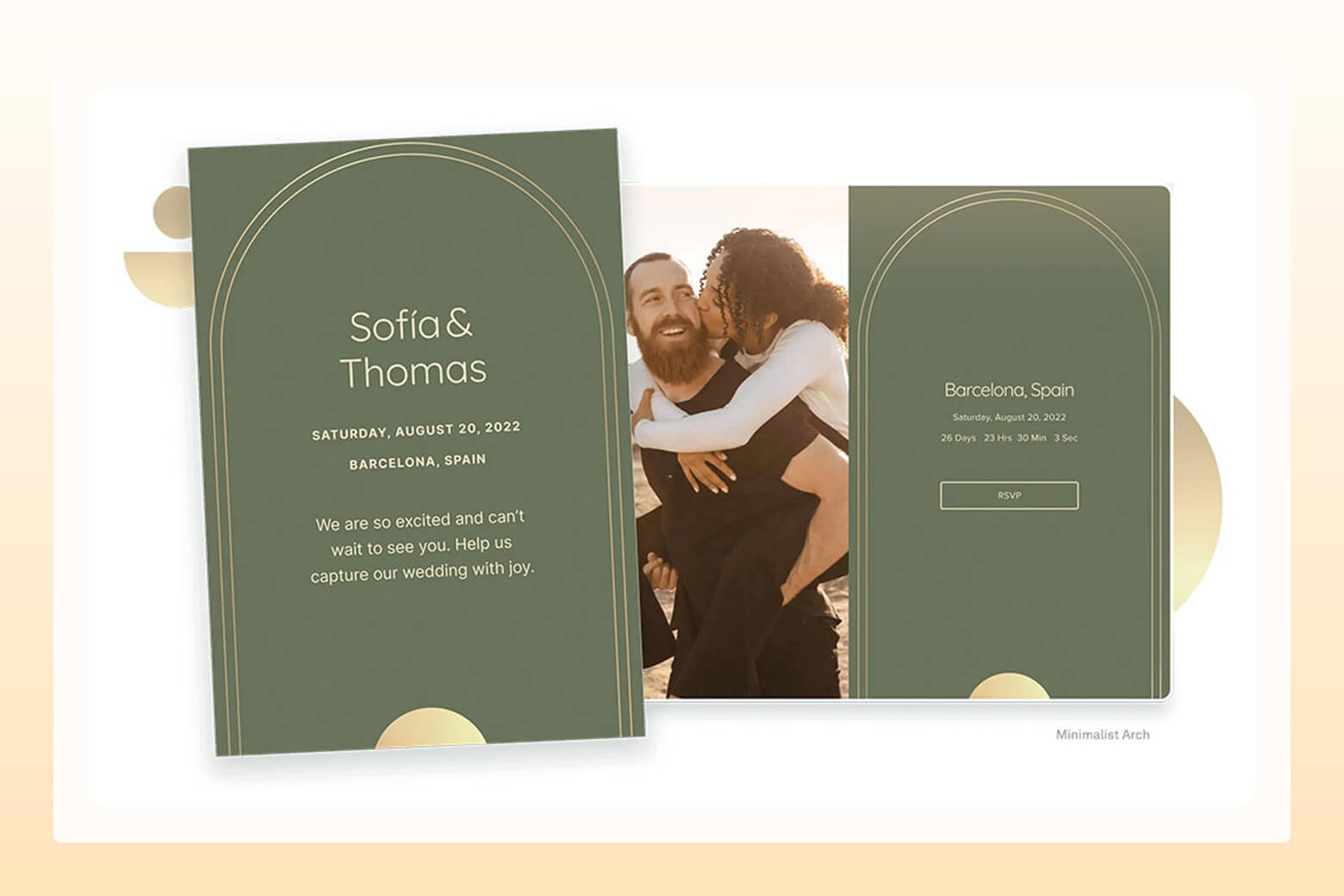
For most formal weddings, yes. The “no email invitations” rule dates back to a time when digital invitations meant a plain email or an evite with banner ads. Modern digital invitations from platforms like Joy are designed to match the elegance of printed stationery, with custom colors, typography, and imagery. A guest receiving a polished digital invitation on their phone or laptop has a similar experience to opening an envelope, minus the paper.
The exception is truly black-tie or white-tie events. If your dress code requires a tuxedo or evening gown, most etiquette experts still recommend printed invitations as part of the overall formality.
Generational Considerations
Older guests (grandparents, great-aunts and great-uncles) may not use email regularly or may have difficulty navigating digital invitations. For these guests, sending a printed invitation, even if the rest of your list gets digital, shows thoughtfulness. You can still direct them to your wedding website for RSVP by including the URL on the printed card.
Religious and Cultural Traditions
Some religious and cultural ceremonies have specific invitation traditions. Catholic weddings may include pew cards and ceremony booklets. Hindu weddings often include multi-day event details. Jewish weddings may include a separate ketubah or ceremony-specific information. In these cases, a printed invitation suite may better accommodate the additional enclosures and traditional formatting. Check with your officiant or family for guidance on what is expected.
When Print Is Still the Right Choice
- Black-tie or white-tie ceremonies
- Weddings with many older guests who are not comfortable with email
- Couples who want physical keepsakes for guests
- Religious ceremonies with formal invitation traditions
- Events where the invitation itself is part of the design aesthetic (letterpress, foil stamping, wax seals)
When Digital Works Well
- Casual to semi-formal weddings
- Destination weddings (guests are already managing travel digitally)
- Budget-conscious couples
- Weddings with short planning timelines
- Eco-conscious couples
- Couples who want real-time RSVP tracking
- Second weddings and vow renewals
The Hybrid Approach
Many couples find the best solution is a combination: digital invitations for most guests and printed invitations for a smaller group who would benefit from physical mail.
A typical hybrid split for a 150-person wedding might look like:
- 120 guests: digital invitations with online RSVP
- 30 guests: printed invitations with a wedding website URL for online RSVP
Who Gets What
Here is how to decide which guests get digital vs print:
- Digital invitations: Friends, coworkers, cousins and extended family who are comfortable with email, destination or out-of-town guests who are already planning travel online
- Print invitations: Grandparents and elderly relatives, anyone you know does not use email regularly, VIPs for whom the printed invitation feels like a meaningful gesture
How to Run a Hybrid Invitation Plan
- Design a cohesive look. Use the same color palette, fonts, and design elements across both formats so the digital and print versions feel like they belong to the same wedding.
- Include the wedding website URL on every printed invitation. This gives print recipients access to the same online RSVP, hotel booking links, and travel details that digital recipients get automatically.
- Use the same RSVP deadline. Managing two different deadlines creates confusion. A single RSVP date simplifies tracking.
- Send digital invitations to friends and coworkers first. They are more likely to RSVP quickly, which gives you early momentum on your headcount.
- Mail printed invitations the same week. Stagger by a day or two at most. You do not want print recipients hearing about the wedding from digital recipients before their invitation arrives.
This approach keeps costs low (printing 30 invitations vs 150 cuts print costs by 80%) while ensuring no guest is left out due to technology barriers.
Common Mistakes
Avoid these pitfalls whether you go digital, print, or hybrid:
- Sending digital invitations to spam-prone email addresses: Ask guests to check their spam folder, or send a heads-up text before the invitation goes out. Work email addresses are more likely to filter invitations than personal ones.
- Not including the wedding website URL on printed invitations: Print recipients miss hotel booking links, travel details, and online RSVP unless you include the URL on the invitation or a details card.
- Waiting too long to order printed invitations: Custom print orders take 4-8 weeks. Add 1-2 weeks for addressing and mailing. Order at least 10-12 weeks before you need them in mailboxes.
- Skipping RSVP reminders: Whether digital or print, 20-30% of guests will not respond by the deadline. Plan to send at least one reminder. Digital platforms automate this; for print, you will need to follow up manually.
- Ordering exactly the number of invitations you need: Order 15-20% extra. You will have addressing mistakes, last-minute additions, and keepsake requests.
- Mismatched formality between invitation and event: A casual digital invitation for a black-tie wedding (or an ornate letterpress suite for a backyard barbecue) sets the wrong tone. Match the invitation style to the event.
- Forgetting to proofread: Printed typos are permanent and expensive. Have at least two people proof every detail: names, dates, times, venue addresses, and the RSVP deadline.
“Best For” Summary
Use this quick reference to match your situation to the right format:
| Situation | Best Format | Why |
|---|---|---|
| Budget under $500 for invitations | Digital | Print rarely fits this budget at 100+ guests |
| Black-tie or ultra-formal wedding | Sets the tone guests expect for formal events | |
| Short timeline (under 3 months) | Digital | No print lead time; instant delivery |
| Large guest list (200+) | Digital or Hybrid | Print costs scale linearly; savings are largest here |
| Many elderly or non-digital guests | Hybrid | Print for those who need it, digital for everyone else |
| Destination wedding | Digital | Guests need links to booking, travel, and logistics anyway |
| Eco-conscious couple | Digital | Zero paper, zero postage, zero waste |
| Keepsake-focused couple | Print or Hybrid | Physical invitations are meaningful mementos |
| Religious ceremony with traditional enclosures | Print or Hybrid | Accommodates pew cards, ceremony details, multi-day events |
| Second wedding or vow renewal | Digital | Typically less formal; cost savings appreciated |
| Mixed guest list (all ages, all tech levels) | Hybrid | Best of both worlds, no one left out |
What to Include in Wedding Invitations (Both Formats)
Regardless of format, every wedding invitation needs:
- Names of the couple (and hosts, if applicable)
- Date, time, and ceremony location
- Reception location (if different)
- RSVP deadline and method
- Dress code (if not standard)
- Wedding website URL for additional details
Digital invitations can also include direct links to your wedding website, hotel booking information, and maps: information that would require a separate details card in a print suite.
Frequently Asked Questions
Are digital wedding invitations acceptable etiquette?
Yes. Digital wedding invitations are widely accepted for casual, semi-formal, and most formal weddings. Modern digital invitations are designed with the same level of polish as printed stationery, with custom colors, typography, and imagery. The main exception is black-tie or ultra-formal events, where printed invitations are still the convention. For every other formality level, a well-executed digital invitation is entirely appropriate.
How much do digital wedding invitations cost?
Digital wedding invitations range from free (basic designs) to $50-150 for premium animated or custom designs. This compares to $200-800+ for printed invitations including design, printing, and postage for 100 guests.
Do digital invitations have lower RSVP rates?
Digital invitations with online RSVP links often achieve higher response rates than printed invitations with mail-back RSVP cards, because the action is immediate and frictionless. Automated reminders further improve response rates.
Can you do both digital and print wedding invitations?
Yes, many couples send digital invitations to most guests and printed invitations to older relatives or guests without reliable email access. This hybrid approach balances cost savings with inclusivity.
Is it rude to send wedding invitations by email?
Not for most weddings. Etiquette norms have evolved with technology. What matters is that the invitation is well-designed, timely, and includes all the information guests need. A thoughtful digital invitation is better received than a rushed or error-filled printed one. The only scenario where email invitations may feel out of place is a very formal event where every detail, from the wax seal to the calligraphy, is part of the experience.
Joy’s digital wedding invitations include built-in RSVP tracking and automated reminders, free to send to all your guests.
