

Last Updated on July 20, 2026 by Joy Editors
Quick answer: Choose a wedding venue by first locking in your budget and guest count, then filtering by location, style, and availability. Tour at least 3 venues, ask about vendor restrictions and hidden fees, and read the contract carefully before signing. Start the search 12 to 18 months out for the best selection.
The venue is the single decision that shapes everything else: your date, your guest count, your catering options, your photographer’s canvas, and a big chunk of your budget. Get it right and the rest of the planning falls into place. Get it wrong and you spend the next year working around a bad fit.
This guide covers the 12 factors that actually matter when evaluating venues, plus the questions to ask before you sign anything.
1. Set Your Budget Before You Tour Anything
Venue pricing is deceptive. The rental fee is just the starting point. Most venues layer on catering minimums, service charges (often 18 to 22 percent), setup and breakdown fees, parking, and required add-ons like tables, linens, and AV. A venue listed at $3,000 can easily become $12,000 all-in.
Before you tour, define your total venue budget — including food and drink — not just the room rental. Most couples spend 25 to 35 percent of their total wedding budget on the venue. For a $30,000 wedding, that is $7,500 to $10,500 for everything venue-related.
Pro tip: Ask every venue for a sample invoice from a recent wedding at your guest count. That gives you a real all-in number, not a marketing figure.
2. Know Your Guest Count First
Guest count determines which venues are even worth touring. A space that holds 200 people but only has 80 guests will feel empty. A venue designed for 100 that you try to squeeze 140 into creates a miserable experience for everyone.
You do not need a finalized list at this stage. A realistic estimate within 20 people is enough to filter venues. Build in a small buffer: if you expect 90 guests, look at venues comfortable for 100 to 110.
Once you start narrowing down venues, keeping a running guest list becomes essential. Joy’s guest list tool lets you track names, meal preferences, plus-ones, and RSVPs — so you always have an accurate headcount to compare against venue capacities.
3. Decide on Location and Accessibility
Location affects guest attendance more than most couples realize. A venue that requires a 90-minute drive from the nearest airport will reduce out-of-town attendance. An urban venue with no parking will add cost and logistics.
Consider:
- Proximity to airports and hotels for out-of-town guests
- Parking availability or valet/shuttle arrangements
- Accessibility for elderly guests or guests with mobility needs
- Whether the location is meaningful to you as a couple
If you have a significant number of out-of-town guests, setting up a hotel room block near the venue makes attendance easier and keeps guests together. Joy’s hotel room block guide covers how to negotiate rates and manage the logistics. Joy also offers a hotel room block tool that lets you reserve discounted room blocks and share booking links directly on your wedding website — so guests can book accommodations in just a few clicks.
As your guest list grows, you may want to customize how people RSVP based on which events they are invited to. Joy lets you turn off RSVPs for specific sub-events or customize your RSVP questions to collect meal choices, dietary restrictions, and travel plans — all useful information as you finalize your venue and catering decisions.
4. Choose Your Venue Style
Venue style sets the aesthetic tone for the entire wedding. The main categories:
| Style | Best for | Typical tradeoff |
|---|---|---|
| Ballroom / hotel | Large guest counts, formal receptions | Less character, often requires more decor |
| Barn / farm | Rustic, outdoor feel with indoor backup | May require renting everything (tables, linens, restrooms) |
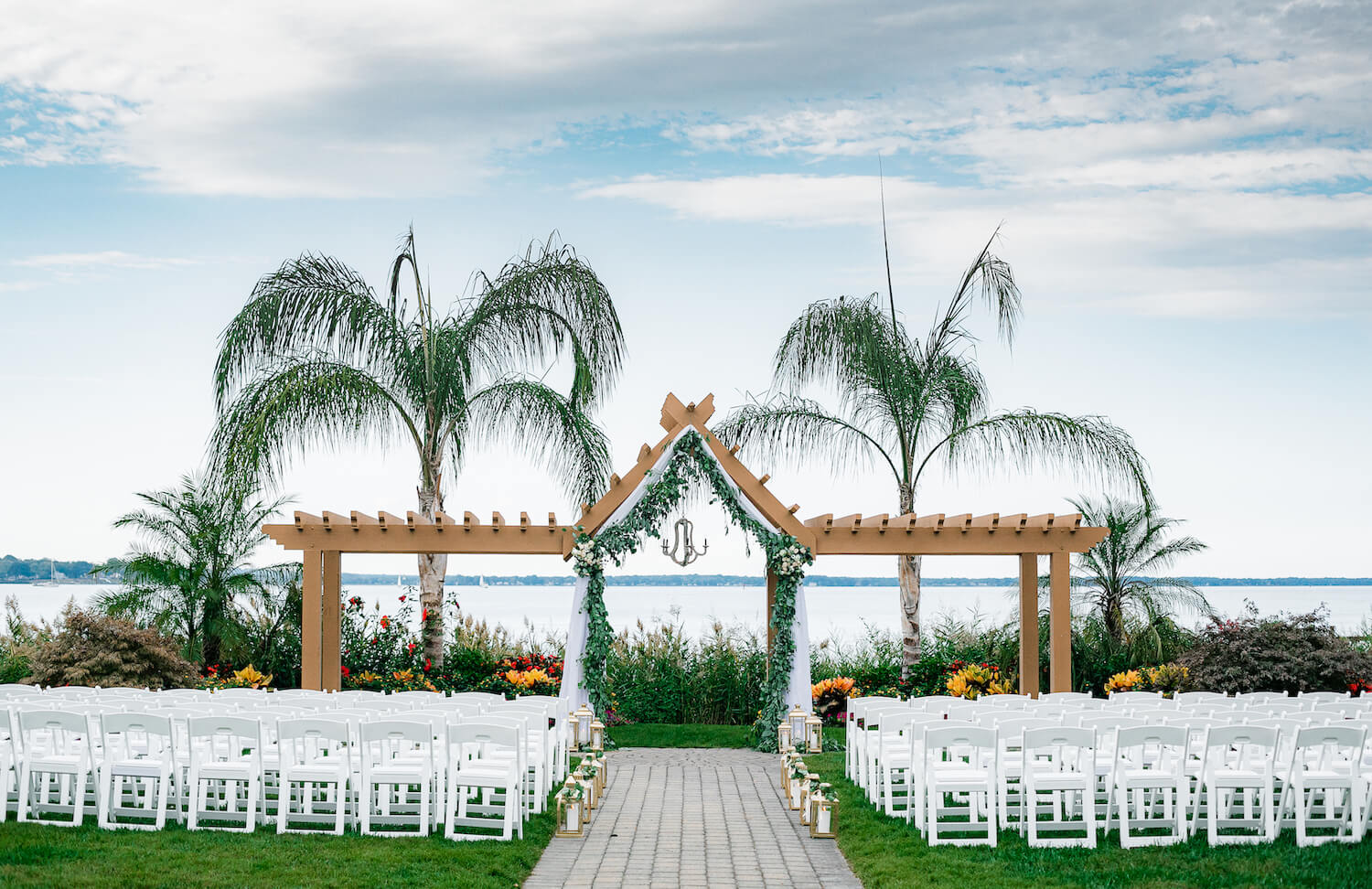
| Garden / estate | Outdoor ceremony, natural backdrop | Weather-dependent, need a backup plan |
| Industrial / loft | Modern, minimal, urban couples | Acoustics can be challenging, often BYOE (bring your own everything) |
| Historic building | Unique architecture, built-in character | Restrictions on decor, candles, or modifications |
| Restaurant / private dining | Intimate weddings under 60 guests | Limited space for dancing or ceremony |
5. Check Availability for Your Date Range
Most couples face a choice: pick the venue first and work around their available dates, or set a date first and find venues that have it open. Neither approach is wrong, but being flexible on date gives you significantly more options and often better pricing.
Saturday evenings in peak season (May through October) book fastest. Friday evenings and Sunday afternoons are often 20 to 30 percent less expensive at the same venue. Off-season months (November through March, excluding holidays) can offer even steeper discounts.
Once you have locked in both venue and date, Joy’s event countdown feature keeps the excitement going — it displays a live countdown on your wedding website that you and your guests can check as the big day approaches.
Pro tip: Ask venues what their “shoulder season” looks like. Many will negotiate on price or include extras (upgraded linens, extended hours) to fill slower dates.
6. Understand the Catering Policy
Catering policy is one of the most important — and most overlooked — venue factors. Three common models:
- In-house catering required: The venue provides all food and drink. Convenient, but you have limited menu flexibility and must meet their minimum spend.
- Preferred vendor list: You choose from a pre-approved list of caterers. More flexibility, but you cannot bring in just anyone.
- Open vendor policy: You hire any licensed caterer. Maximum flexibility, but you coordinate everything yourself.
If you have dietary requirements, cultural food traditions, or a specific cuisine in mind, confirm early whether the venue can accommodate them. Ask about tastings, bar package options, and what happens if you exceed the minimum guest count.
7. Ask About Vendor Restrictions
Many venues have restrictions beyond catering. Common ones include:
- Required use of their in-house DJ or AV team
- No open flames (candles, sparklers)
- No confetti, glitter, or flower petals on the floor
- Specific approved photographers or videographers only
- No outside alcohol or a corkage fee for bringing your own wine
Get the full vendor policy in writing before you fall in love with a venue. A venue that forces you to use their preferred DJ at $3,000 when you wanted your college friend to play for free is a real cost difference.
8. Confirm Exclusive Use
Some venues — particularly hotels and large estates — host multiple events simultaneously. This can mean your guests share a lobby, parking lot, or even adjacent event spaces with a corporate conference or another wedding.
If exclusivity matters to you, ask directly: “Will we be the only event at this venue on our wedding day?” Get the answer in writing in the contract.
9. Know the Noise Curfew and End Time
Noise ordinances and venue curfews vary widely. Some venues require music to end at 10 PM. Others allow you to party until 1 AM. This directly affects your timeline, your vendor contracts, and whether the reception feels rushed.
Ask about:
- Hard end time for amplified music
- Whether guests can remain after music ends
- Overtime fees if you run long
- Whether there is a sound limiter on the venue’s audio system
10. Evaluate the Getting-Ready Spaces
Many couples overlook getting-ready logistics until the morning of the wedding. A venue with a dedicated bridal suite and a separate groomsmen space saves significant time and stress, and gives your photographer better settings for preparation photos.
Ask whether these spaces are included in the rental or cost extra, how many people they comfortably accommodate, and whether they have good natural light.
11. Have a Weather Backup Plan
Any outdoor or partially outdoor venue requires a contingency plan. Ask:
- Is there an indoor space that can accommodate the full guest count if weather forces a move?
- Does the venue provide tent rental, or do you need to arrange that separately?
- What is the decision timeline for moving indoors — the night before, the morning of?
- Are there additional costs for using the backup space?
A venue that says “we’ll figure it out” is not an acceptable answer. Get the backup plan in writing.
Changes of plan happen — and they sometimes come with financial implications. If you have booked accommodations through a hotel room block, it is worth understanding any early charges or cancellation fees that might apply. Learn more about how hotel charges work before check-in so you and your guests are prepared if plans shift.
12. Read the Contract Before You Sign
Venue contracts are long and contain terms that matter. Before signing, confirm:
- Exact rental period (setup time, event time, breakdown time)
- What is included vs. what costs extra
- Cancellation and postponement policy
- Deposit amount and payment schedule
- Force majeure clause (what happens if the venue cannot host your event)
- Whether the venue coordinator is included or billed separately
If anything is unclear, ask for clarification in writing before you sign. A verbal promise from a sales coordinator is not enforceable.
Wedding Venue Checklist: Questions to Ask on Every Tour
- What is the maximum capacity for a seated dinner with a dance floor?
- What is included in the rental fee?
- What is the catering policy — in-house, preferred list, or open?
- Are we the only event on our date?
- What is the noise curfew and hard end time?
- What is the backup plan for weather?
- What vendor restrictions apply?
- Is there a getting-ready suite included?
- What is the parking situation?
- What are the cancellation and postponement terms?
- Is there a venue coordinator on-site, and what do they handle?
- Can we see a sample invoice from a recent wedding at our guest count?
Share Venue Information with Your Guests
Once you have booked your venue, the next step is making sure your guests have all the details they need — especially if your wedding involves travel. Your wedding website is the best place to centralize venue information, directions, parking instructions, and accommodations.
Joy’s Where to Stay page gives guests a clear, at-a-glance view of nearby hotel options, room blocks, and booking links. Instead of fielding individual questions about where to stay, you can point everyone to one page with all the details — hotel names, distances from the venue, rates, and direct booking links.
If you set up a hotel room block through Joy, the booking links appear automatically on your Where to Stay page. Guests can compare options and book their rooms without leaving your wedding website.
Beyond accommodations, your Joy wedding website lets you share venue directions, parking details, ceremony and reception locations, dress code, and any other logistics guests need to know — all in one place, updated in real time.
Keep Guests Informed After You Book
Booking the venue is a milestone — but your guests still need to know what comes next. Joy’s wedding website makes it easy to keep everyone in the loop as details come together:
- Timeline and schedule: Share your ceremony time, cocktail hour, and reception details so guests can plan their day.
- Travel and transportation: Add shuttle schedules, airport information, and driving directions for out-of-town guests.
- RSVP tracking: As guests respond, Joy’s guest list tool automatically updates counts so you always know your confirmed headcount.
- Sub-events: If your wedding spans multiple days (welcome dinner, ceremony, brunch), you can create separate event pages with their own venues and details.
- Updates and changes: Need to change a time or add a new detail? Update your website once and every guest sees the latest information.
For couples planning a destination wedding, this is especially valuable. Guests traveling to an unfamiliar location rely on your wedding website for logistics — from flight recommendations to local dining suggestions. Joy’s destination wedding tools help you organize all of that in one place.
Planning tip: If you are hosting a destination wedding or expect many out-of-town guests, start filling in your wedding website travel details as soon as you have your venue confirmed. Early information helps guests plan travel and budget — and you will get faster RSVPs.
Plan your venue search with the right tools. Joy’s free wedding website gives you a guest list manager to keep your headcount accurate, customizable RSVP questions to collect meal preferences and plus-ones, and a Where to Stay page for sharing hotel and travel information. Start your free wedding website on Joy.
Frequently Asked Questions
When should you start looking for a wedding venue?
Start 12 to 18 months before your wedding date. Popular venues book up fast, and an early search gives you more options, better negotiating power, and time to compare contracts carefully.
What percentage of a wedding budget should go to the venue?
Most couples spend 25 to 35 percent of their total wedding budget on the venue. That includes the rental fee, any required catering minimums, and add-ons like tables, linens, and AV equipment.
What questions should you ask when touring a wedding venue?
Ask about capacity, catering policy (in-house vs. outside vendors), noise curfew, parking, exclusive use, backup plans for weather, what is included in the rental fee, and whether there is a venue coordinator on-site.
Should you book the venue or set the date first?
Most couples let the venue drive the date. If you have a non-negotiable date, search for venues with that date available. If you are flexible, find a venue you love first and choose from their open dates.
What are the most common wedding venue mistakes?
The most common mistakes are underestimating the all-in cost (rental plus catering plus fees), choosing a venue that is too large for the guest list, ignoring noise curfews, and not reading the vendor restriction policy before signing.
