Last Updated on July 15, 2026 by Joy Editors
The standard wedding planning timeline runs 12 months, though 14–18 months is recommended for popular venues and peak-season dates (May through October). This month-by-month checklist covers every major task from the day you get engaged to your wedding day — with printable checkpoints, current costs, and links to tools that make each step easier.
Quick reference: The average cost of a wedding in 2026 is $35,000–$39,000. Guest counts average 120–140. The most time-sensitive bookings are your venue (12+ months), photographer (10–12 months), and caterer (9–10 months).

12+ Months Before: Set the Foundation
Everything else depends on these first decisions. Get them right and the rest of your planning flows naturally.
- Set your wedding budget. The single most important first step. Decide how much you and your families can comfortably spend. Use a spreadsheet or budgeting tool to track allocations — typical breakdowns: venue/catering (40–50%), photography/video (10–12%), florals/decor (8–10%), attire (5–8%), music/entertainment (5–8%).
- Throw an engagement party. Celebrate with close friends and family. It’s also a natural starting point for your guest list.
- Decide on your wedding style. Formal black-tie, garden party, rustic barn, modern minimalist, destination — your style drives every vendor and design decision. Browse Pinterest, Instagram, and wedding blogs for inspiration.
- Choose and book your venue. Popular venues book 12–18 months in advance, especially for Saturday dates in peak season. Tour at least 3 venues. Consider capacity, catering policies, accessibility, and backup options for outdoor spaces.
- Set your wedding date. Often determined by venue availability. If you have a specific date in mind, search for venues that are open. Weekday and Sunday weddings can save 20–40% on venue costs.
- Start your guest list. Draft a preliminary list with your partner and families. Categorize into must-invite, should-invite, and nice-to-invite tiers. Your venue capacity and budget will determine the final number.
- Select your wedding party. Choose your best man, maid of honor, bridesmaids, groomsmen, and anyone else who’ll play a role. Ask them in person — it’s a big ask and a big honor.
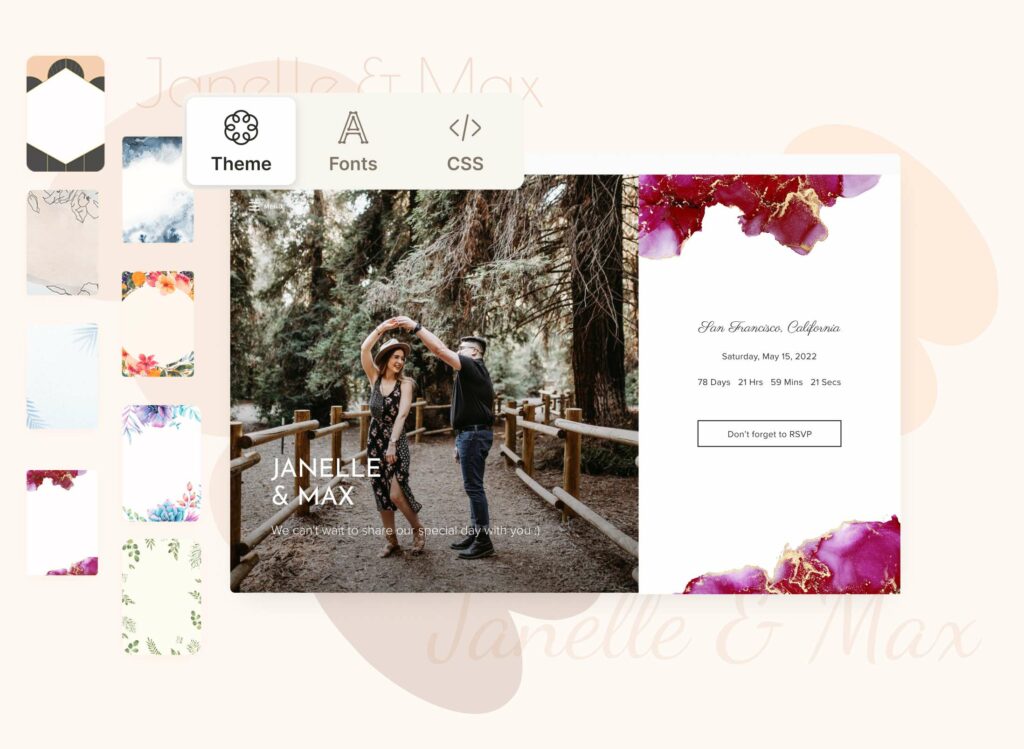
- Create your wedding website. A wedding website is the central hub for everything your guests need — date, venue details, travel info, registry, and RSVP. Create yours early so you can include the link on save-the-dates. Joy’s free wedding websites come with built-in guest list management, RSVP tracking, and custom design templates.
10–12 Months Before: Book Priority Vendors
These vendors book out fastest. Aim to have all of them locked in before you hit the 9-month mark.
- Hire a wedding planner (if using one). A full-service planner handles coordination, vendor sourcing, and budget management. Day-of coordinators (typically $1,500–$3,000) are a more affordable option who manage logistics on the wedding day itself. Even if you’re DIY-planning, a day-of coordinator is worth it.
- Book your photographer and videographer. Great wedding photographers book 12+ months out. Review portfolios, check past full weddings (not just highlights), and make sure their editing style matches your taste. Average cost: $3,000–$6,000 for photography.
- Take engagement photos. Many photographers include an engagement session. These photos work beautifully on your wedding website and save-the-dates.
- Book entertainment. Bands and popular DJs fill their calendars early. Decide whether you want a live band, DJ, or both — some couples do a band for dinner and a DJ for dancing.
- Book your caterer. If your venue doesn’t provide in-house catering, start tastings now. Decide on service style: plated dinner, family-style, buffet, or stations. Budget 30–40% of your total for food and beverage.
- Book your officiant. Whether it’s a religious leader, professional officiant, or a friend getting ordained online, book them early. Check your state’s requirements for officiant credentials — they vary.
- Set up your wedding registry. Register with a mix of physical gifts, honeymoon fund contributions, and cash funds. Joy’s registry lets you add items from any store, create zero-fee cash funds, and manage everything in one place. Share the link on your wedding website.
- Send save-the-dates. Mail or email save-the-dates 10–12 months before your wedding (earlier for destination weddings). Include the date, city, and your wedding website URL. Design and send digital save-the-dates through Joy for a free, fast option.
8–10 Months Before: Design and Details
With the big decisions made, now you’re building the look and feel of your wedding.
- Start dress or suit shopping. Wedding gowns can take 4–6 months for ordering and alterations. Suits or tuxedos need 2–3 months. Start early so you’re not rushed.
- Book your florist. Share your color palette, venue photos, and inspiration images. Discuss budget openly — a good florist can work within almost any range. Average cost: $2,000–$5,000.
- Book a baker. Schedule tastings at 2–3 bakeries. If you’re going non-traditional (donut wall, dessert bar, pie table), book that vendor now too.
- Hire a hair and makeup artist. Book a trial session to test your look before the big day. If you have a large bridal party, make sure the artist can accommodate everyone’s timing.
- Start planning your ceremony. Meet with your officiant to discuss the structure, readings, vows, and any religious or cultural elements. If you’re writing personal vows, start drafting.
- Research and book hotel room blocks. Secure group rates at hotels near your venue for out-of-town guests. Many hotels offer complimentary room blocks (no financial commitment from you) if booked early enough. Add hotel info and booking links to your wedding website.
- Plan your rehearsal dinner. Book a restaurant or venue for the night before. The rehearsal dinner typically includes the wedding party, immediate family, and out-of-town guests.
6–8 Months Before: Invitations and Logistics
This is when the planning shifts from creative decisions to logistics and execution.
- Order wedding invitations. Whether physical or digital, order invitations 6–8 months out so they’re ready to mail at the 8-week mark. Include: names, date, time, venue, RSVP deadline, dress code, and your wedding website URL.
- Plan the reception. Finalize layout, seating chart structure (rounds vs. long tables), cocktail hour flow, and reception timeline. Work with your venue coordinator and planner on logistics.
- Book transportation. Arrange shuttles, limos, or cars for the wedding party and guests (especially if the venue is remote). Consider a shuttle from the hotel block to the venue.
- Book a wedding night hotel room. Reserve a suite or special room for your wedding night. Many venues offer special rates for couples.
- Choose wedding party attire. Select bridesmaid dresses, groomsmen suits, and any attire for flower girls or ring bearers. Give your party enough time to order and alter.
- Plan your honeymoon. Research destinations, book flights and hotels, and check passport expiration dates (renewals take 6–8 weeks). Some couples opt for a minimoon right after and a bigger trip later.
- Start DIY projects. If you’re making welcome bags, favors, signage, or decor, start now. DIY projects always take longer than expected.
4–6 Months Before: Finalize the Details
- Send invitations. Mail or send digital invitations 6–8 weeks before the wedding. Set an RSVP deadline 3–4 weeks before the wedding to give yourself time to adjust final numbers.
- Finalize your menu. Confirm your catering selections, number of courses, bar package, and any dietary accommodations. Schedule a final tasting if your caterer offers one.
- Buy wedding bands. Allow 4–6 weeks for sizing, engraving, and any custom work. Visit several jewelers and consider both partners’ daily comfort and style.
- Plan pre-wedding events. Coordinate with your wedding party on bridal showers, bachelor/bachelorette parties, and any other gatherings.
- Schedule dress fittings. First fitting at 3–4 months out, final fitting at 4–6 weeks before. Bring your shoes and undergarments to fittings.
- Book any remaining vendors. Photo booth, calligrapher, welcome bag assembly, day-of stationery (programs, menus, place cards), event rentals (linens, chairs, lighting).
- Get your marriage license. Check your state’s requirements for timing (some expire after 30–90 days), documentation, and waiting periods.
2–4 Months Before: Confirm Everything
- Track RSVPs. Follow up with guests who haven’t responded as your deadline approaches. Joy’s online RSVP makes tracking effortless — see who’s responded, who hasn’t, and meal selections in real time.
- Create your seating chart. Wait until most RSVPs are in, then arrange tables. Consider family dynamics, friend groups, and who will keep the energy up on the dance floor.
- Write your vows. If you’re doing personal vows, start writing 2–3 months out. Read them aloud — they should feel natural to speak, not just read. Keep them to 1–2 minutes each.
- Break in your wedding shoes. Wear them around the house a few times. Serious advice — blisters on your wedding day are no fun.
- Schedule beauty appointments. Hair and makeup trial, skincare treatments, teeth whitening, or any grooming appointments you want completed before the wedding.
- Finalize ceremony details. Readings, music playlist, processional order, unity ceremony elements (if any). Give your officiant the finalized ceremony outline.
- Confirm vendor details. Touch base with every vendor to confirm date, time, location, setup requirements, and final payments.
1–2 Months Before: Final Sprint
- Finalize your guest count and seating chart. Lock in the final numbers with your caterer and venue. Create place cards or a seating display.
- Assemble welcome bags for hotel guests. Include water, snacks, a weekend itinerary, and a personal welcome note.
- Create the day-of timeline. A detailed minute-by-minute schedule for the wedding day: getting ready → ceremony → cocktail hour → reception → exit. Share with your planner, photographer, DJ, and wedding party.
- Have a final dress fitting. Everything should fit perfectly. Bring your accessories (veil, jewelry, shoes) to check the full look.
- Confirm final payments. Most vendors require final payment 2–4 weeks before. Prepare tip envelopes for day-of vendor gratuities.
- Practice your first dance. Even a simple sway-and-turn looks better with a little practice. Take a lesson if you want a choreographed moment.
- Update your wedding website with final details — schedule, directions, parking info, and any last-minute changes.
2–4 Weeks Before: Loose Ends
- Confirm all vendor timelines and deliveries. Send each vendor a detailed email with arrival time, setup location, contact numbers, and any special instructions.
- Assign day-of roles. Someone to manage the guest book, someone to handle gifts, someone to wrangle the wedding party. Don’t leave this to chance.
- Get your marriage license (if you haven’t already). Check your jurisdiction’s timing requirements — some licenses are only valid for 30 days.
- Pack for the honeymoon. Get it done early so it’s one less thing on your mind in the final week.
- Write thank-you notes for any early gifts. Starting now means you won’t face a mountain after the wedding.
- Prepare toasts or speeches. If you’re giving a speech, write it out and practice. If others are toasting, check in to make sure they’re prepared (and keeping it appropriate).
1–2 Weeks Before: The Home Stretch
- Confirm final headcount with your venue and caterer.
- Finalize the seating chart and have place cards printed or written.
- Prepare vendor tip envelopes. Cash tips for day-of vendors are customary. Have them sealed, labeled, and ready to hand out.
- Charge all devices. Phones, battery packs, Bluetooth speakers — anything you’ll need on the day.
- Organize all items for the venue. Create a packing list of everything that needs to go to the venue: place cards, favors, signage, guest book, cake topper, card box, emergency kit.
- Pick up your attire. Try everything on one final time — including accessories — to make sure it’s ready to go.
2–3 Days Before: Breathe
- Attend the rehearsal and rehearsal dinner. Walk through the ceremony with your wedding party and officiant. This is the time to work out logistics, not wing it on the day.
- Deliver items to the venue. Drop off decor, signage, favors, and anything that can be set up early.
- Confirm transportation. Verify pickup times with all drivers, shuttle services, and ride-share backup plans.
- Prepare a day-of emergency kit. Include: safety pins, sewing kit, stain remover, pain reliever, blister bandages, breath mints, tissues, phone charger, snacks, and a water bottle.
- Hand off vendor payments and tips to your planner or a trusted person for distribution.
- Get a good night’s sleep. You’ve done the work. Trust your planning and your team.
The Day Before
- Do something relaxing. Spa treatment, favorite meal, or just time with your partner or closest friends. Resist the urge to micromanage — your planner and vendors have it handled.
- Lay out everything you need for tomorrow. Outfit, shoes, jewelry, vow cards, emergency kit, ID (for the marriage license), phone charger.
- Confirm the morning timeline with your hair and makeup artist and photographer.
- Say your thank-yous. A quiet moment with your parents, partner, or wedding party — before the beautiful chaos of the big day.
Wedding Day
You made it. Every checklist item, vendor call, and detail has led to this moment. Trust the plan. Eat breakfast. Drink water. Let your team handle the logistics. Your only job today is to be present, soak it all in, and marry the person you love.
Frequently Asked Questions
How far in advance should you start planning a wedding?
Most couples plan for 12–14 months. If you’re eyeing a popular venue or a peak-season Saturday date (May through October), 14–18 months gives you more options. Short engagements (6 months or less) are absolutely doable — you’ll just need to be flexible on date, venue, and vendor availability.
What should you book first when planning a wedding?
Book your venue first — it determines your date, guest count, and many other decisions. After the venue, book your photographer, caterer, and officiant (in that order). These four vendors fill up fastest.
How much does a wedding cost in 2026?
The average U.S. wedding in 2026 costs $35,000–$39,000 according to industry surveys. But that average is skewed by high-cost markets. The median is closer to $25,000–$30,000. Your actual cost depends on location, guest count, and the choices you make — couples in New York City or San Francisco spend significantly more than couples in smaller markets.
What can I do to save time on wedding planning?
Use an all-in-one platform like Joy that combines your wedding website, guest list, RSVPs, registry, and invitations in one place. You’ll avoid juggling multiple tools and reduce the time spent on logistics. Digital save-the-dates and invitations also save weeks compared to traditional mailing.
Is 6 months enough time to plan a wedding?
Yes, with flexibility. You may not get your first-choice venue or Saturday date, but plenty of couples plan beautiful weddings in 6 months. Focus on the biggest decisions first (venue, caterer, officiant, photographer) and be willing to simplify where needed.
Start Planning With Joy
Joy brings your entire wedding together in one place — your wedding website, guest list, online RSVP, registry, invitations, and hotel room blocks. It’s free to start, beautiful by default, and designed to save you hours of planning time. Get started →
Create the Perfect Wedding Website
Set up your wedding website in minutes with design options to make yours truly unique.