

Last Updated on September 29, 2026 by Joy Editors
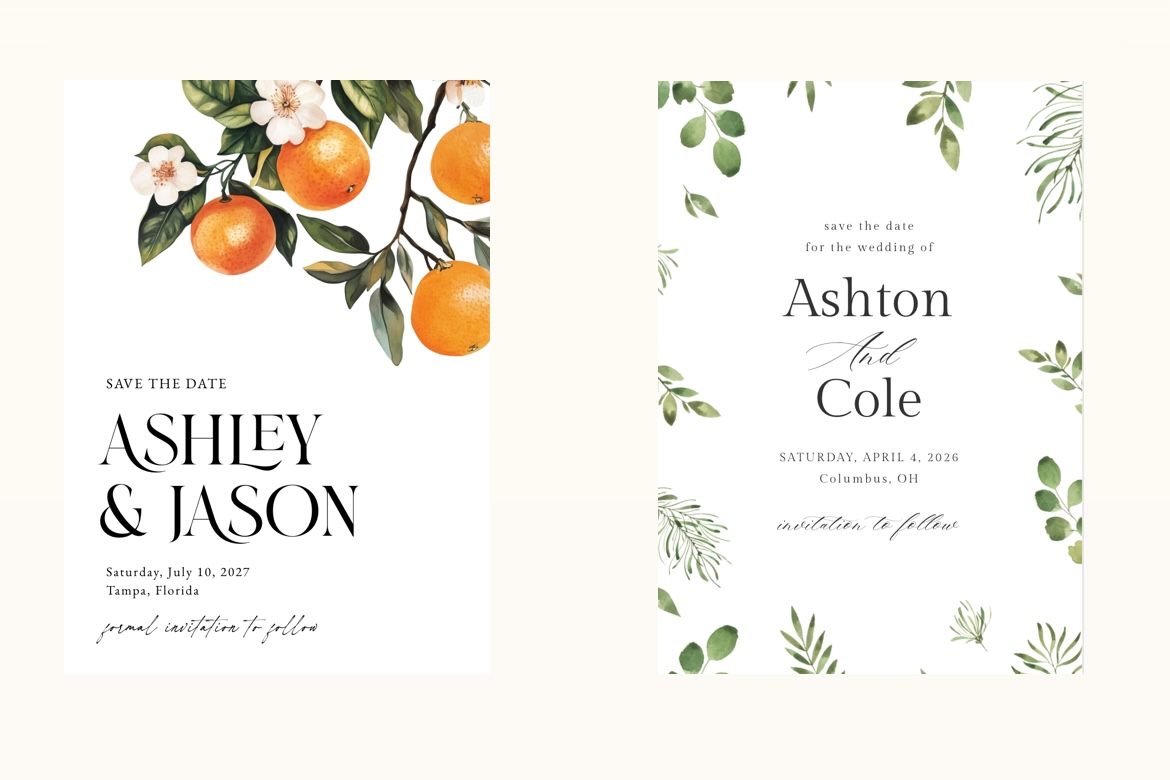
Greenery has become the quiet signature of the modern wedding, and it shows up first on the save the date. A botanical design tells guests what kind of celebration to expect before they read a single word: an outdoor ceremony, a greenhouse reception, a woodland weekend, or a beach resort under the palms.
Because the save the date is the first piece of stationery your guests touch, it also sets the visual tone for everything that follows. Choosing a botanical direction early means your invitations, website, and day-of paper can all grow from the same stem.
Below you will find a clear definition of the botanical style, twelve named designs to browse, and practical guidance on timing, wording, and coordination so the greenery you pick for your announcement can carry through every piece of stationery that follows.
Botanical save the dates feature greenery, leaves, and plant illustration as the main design element, from eucalyptus sprigs and ferns to tropical palms and watercolor wildflowers. They suit garden, outdoor, woodland, tropical, and rustic weddings. On Joy, every botanical design works as a printed card or a digital card with RSVP tracking, plus a matching wedding website.
If you are still deciding between styles, it helps to browse the full range of save the dates first, then narrow by theme. Botanical sits alongside floral, minimalist, rustic, and destination styles, and the differences matter more than most couples expect.
What Makes a Save the Date Botanical
Botanical save the dates are defined by their subject: leaves, stems, and greenery lead the design, while floral designs put blooms first. Many cards blend both, but the emphasis tells you which family a design belongs to. If the first thing you notice is a spray of ferns or a eucalyptus branch rather than a rose or peony, you are looking at a botanical.
Botanical vs. Floral: Where the Line Sits
Floral designs make flowers the subject. Botanical designs make foliage the subject: vines, grasses, branches, and fronds, with blooms in a supporting role or absent entirely. The practical difference is mood. Florals tend to read romantic and colorful, while botanicals read organic, calm, and grounded. A greenery-led card also pairs naturally with almost any palette, which is one reason couples who have not locked in their wedding colors yet often start with botanical stationery.
The Greenery You Will See
Botanical is one of the most flexible save-the-date styles, because the same greenery palette can read as tropical, woodland, desert, or formal garden depending on the plant species and color treatment. The motifs you will encounter most often include:
- Eucalyptus sprigs and garlands, usually in muted sage and gray-green tones
- Ferns and layered forest foliage for woodland and mountain weddings
- Tropical palms, monstera leaves, and banana foliage for beach and destination celebrations
- Succulents and desert plants for Southwest and desert venues
- Illustrated branches, vines, and wreaths that frame the couple’s names
- Evergreen boughs for winter and holiday-adjacent dates
Vintage scientific botanical illustration, the engraved 1850s-style plates with bees and butterflies, is a related style direction worth knowing, though it sits closer to vintage stationery than to the greenery-led designs most couples search for today. Plantable seed paper is another adjacent niche: an eco-minded format where the card itself grows wildflowers. It is a print technique rather than a visual style, and couples interested in low-waste stationery can achieve a similar effect by sending a digital botanical card instead of paper.
12 Botanical Save the Date Designs We Love
Each design below is a real, named save the date you can personalize with your own wording, photo where the layout allows, and color choices. The selection spans classic greenery, minimal illustration, woodland, desert, tropical, dark and moody, and winter evergreen, so there is a botanical sub-style here for nearly every venue type.

Natural Greenery
Textured greenery in soft cream and green tones makes this the anchor pick for rustic and country garden weddings. The layered foliage has an organic, hand-gathered feel that suits barns, vineyards, and backyard ceremonies equally well. If your venue leans natural and unfussy, start here.

Love Branch
A black-and-white illustrated branch proves that botanical does not have to mean green. The minimal line work reads modern and editorial, which makes it a strong match for city loft weddings and couples who want greenery without the garden palette. It also photographs cleanly if you plan to share the design on social media.

Bohemian Eucalyptus
Eucalyptus sprigs paired with a gold accent give this design a foot in two worlds: relaxed boho greenery and a more formal finish. It works well for couples whose wedding blends casual and elegant, such as an outdoor ceremony followed by a dressed-up reception. The muted green and gray palette flatters most color schemes.

Fern Forest
Layered ferns set a clear scene for woodland, forest, and Pacific Northwest ceremonies. The deep green fronds feel lush without being busy, and the design pairs naturally with kraft paper tones and woodsy decor. Couples marrying under trees or beside a lake will find this one easy to picture on a guest’s fridge.

Douglas Fir
Deep green evergreen boughs against black make this the winter botanical. It suits December and holiday-adjacent dates, mountain lodges, and any celebration where pine and candlelight set the tone. The dark background also gives it a formal edge that lighter greenery designs do not carry.

Boho Arch
Botanicals arranged into a modern arch silhouette give greenery a structural, designed quality. The shape echoes ceremony arches and desert-boho styling, so it fits couples planning pampas grass, terracotta, and open-air vows. It is a contemporary way to signal an organic theme without a literal leaf border.

Memoir
Textured pink and white botanicals over a vintage paper background give this design a romantic, slightly autumnal mood. It suits fall weddings, estate venues, and couples who want their greenery softened with warmth. The paper texture reads tactile even in a photo, which helps the card feel like an heirloom.

Chrysanthemum
Dark botanical drama in black and purple makes this the pick for evening and formal garden weddings. The saturated background lets the plant illustration glow, and the whole card reads more gala than garden party. If your dress code is black tie and your venue is a conservatory at night, this design speaks your language.

Fiona’s Flowers
A bright mixed garden palette where botanical and floral overlap, this design suits colorful spring and summer celebrations. Pinks, oranges, and greens sit together the way a real cutting garden does, abundant and cheerful. It is the right call when a pure greenery card feels too restrained for your plans.

Tropical Shadows
Watercolor tropical leaves in blue tones offer a beach and destination alternative to classic green palms. The cooler palette feels coastal and calm, and it works especially well for oceanfront resorts and winter escapes to somewhere warm. Couples who love the tropics but not the typical bright greens should look closely at this one.

Golden Paradise
Tropical botanicals with metallic gold detailing bring a formal finish to destination wedding stationery. The warmth of the gold keeps the palm motif elegant rather than casual, which suits resort celebrations with an elevated dress code. It is a natural bridge between island scenery and black-tie polish.

Succulent Sunset
Watercolor succulents in blue, purple, and pink make this the desert botanical pick. The sunset palette mirrors Southwest landscapes and golden-hour ceremonies, and the watercolor treatment keeps the desert plants soft rather than spiky. Desert venues, Palm Springs weekends, and Scottsdale resorts all pair well here.
How to Choose a Floral Style for Your Wedding
With twelve directions on the table, the fastest way to narrow down is to start from your wedding itself, not the cards. Three questions do most of the work: what season are you marrying in, how formal is the event, and do you want soft or graphic artwork?
Match the Blooms to the Season
The same floral motif can read as spring, summer, fall, or winter depending on the bloom and the palette. Spring calls for cherry blossoms, tulips, and soft pastels. Summer suits loose garden mixes and bright wildflowers. Fall leans into sunflowers, marigolds, and warm golden tones. Winter works best with deep jewel-toned blooms on dark backgrounds, or blue-and-white patterns that feel crisp and formal.
This is guidance, not law. A sunflower design at a June wedding is not wrong; it just plants a specific expectation in guests’ minds. If your wedding has a strong seasonal identity, letting the save the date confirm it makes everything that follows feel cohesive.
Light and Airy vs. Dark and Moody
Most floral save the dates fall into one of two atmospheric camps. Light and airy designs use white or cream grounds, watercolor washes, and plenty of breathing room; they read as daytime, garden, spring, and romantic. Dark and moody designs put saturated blooms against navy, black, or deep green grounds; they read as evening, winter, formal, and dramatic.
Neither is more wedding-appropriate. The right answer usually matches the venue and the time of day. A candlelit winter ceremony in a historic hall pairs beautifully with dark florals, while a midday garden ceremony almost always wants the lighter treatment.
Classic, Vintage, or Modern Line Art
The last fork is treatment. Classic watercolor florals are the broadest category and the safest: hand-painted blooms that suit nearly any wedding. Vintage treatments, like toile-style patterns and porcelain-inspired blues, carry a sense of heritage and pair well with traditional venues and formal dress codes. Modern line art and woodcut styles strip the flower down to its graphic essentials, which suits contemporary spaces and couples who find watercolor too soft.
If you are torn between two, hold them against your invitation plans. The save the date arrives months before the invitation, but guests remember the first card, and the second should feel like a continuation, not a correction.
When to Send Save the Dates
The standard window is six to eight months before the wedding. That gives guests time to request time off, arrange travel, and budget, without the card arriving so early that it gets forgotten.
Push the timeline earlier in two situations. For destination weddings, where nearly every guest needs flights and hotels, aim for eight to twelve months out. The same applies to holiday weekends and peak-season dates, when travel books up fast and guests may be choosing between competing plans.
A few timing notes specific to floral designs and paper logistics:
- Printed cards need production time. Order early enough to allow for printing, addressing, and mailing, so the cards actually land in the six-to-eight-month window rather than leaving your hands then.
- Your guest list must be real. Everyone who receives a save the date must also receive an invitation, so only send to people you are certain about.
- Seasonal florals have no deadline of their own. Floral designs work in every season, so timing depends on your date and your guests’ travel plans, not the artwork.
- Digital sending buys flexibility. If addresses are still trickling in, a digital save the date can go out on the early end while printed cards follow for family and anyone who values paper.
Matching Invitations, Websites, and More
Your save the dates do not have to match your invitations exactly, but keeping the same design family makes the whole stationery set feel intentional rather than assembled. When the floral on the save the date reappears on the invitation months later, guests register it as a thread, and the wedding starts to feel like a designed event long before the day itself.
The simplest path is to stay within one design across formats. You can browse the floral wedding invitations to find the invitation counterpart to the style you choose here, often the same artwork in invitation form. Because floral is a color-led style, your wedding website design can match the palette too: pink for the romantic and cherry blossom picks, with green as the natural direction for greenery-led and citrus palettes.
The payoff of carrying one design from card to website is cumulative. The save the date introduces the motif, the website reinforces it every time a guest checks details, the invitation confirms it, and the day-of stationery closes the loop. Done consistently, a single floral design quietly organizes your entire visual identity.
From Save the Date to RSVP in One Place
The save the date is not just an announcement; it is the first step of guest communication, and the months between it and the wedding are exactly when logistics get messy. Setting up that flow early saves real effort later.
Sending digitally is the flexible option. Every floral design in this article is available as a printed card and as a digital save the date, and many couples split the list: printed cards for family and anyone who keeps stationery, digital for international guests and friends who live on email. The design stays identical either way, so nobody gets a lesser version.
The bigger advantage of digital is what happens next. A digital save the date can point guests straight to your wedding website, where RSVP tracking, schedules, hotel blocks, and travel details live. Because the wedding website can carry the same floral design, guests move from card to site without a visual break, and responses start collecting in one place instead of across texts and calls.
Address collection matters more at this stage than most couples expect. The save-the-date moment is usually when the guest list is still being built, and tracking down addresses is the slow part. Tools that let you request addresses from guests directly, rather than hunting them one by one, turn a spreadsheet chore into a single shared link. By the time invitations go out, the list is complete and responses are already organized.
FAQ
When should I send floral save the dates?
Send save the dates six to eight months before the wedding, and up to a year ahead for destination weddings or holiday weekends. Floral designs work in every season, so timing depends on your date and guest travel plans, not the artwork.
What should I include on a floral save the date?
Your names, the wedding date, the city or venue, and your wedding website URL. The website carries details that can change, like hotel blocks and schedules, so the card stays simple and lets the floral artwork lead. Formal invitations follow later.
Do my save the dates have to match my wedding invitations?
They do not have to match exactly, but keeping the same design family makes the whole stationery set feel intentional. Joy carries the same floral designs across save the dates, invitations, and wedding websites, so matching is the default, not extra work.
Can I send floral save the dates digitally?
Yes. Joy offers floral designs as printed cards and as digital save the dates with online RSVP tracking. Digital sending works well for international guests and for couples still collecting addresses, since Joy can gather guest addresses for you.
What floral style fits a formal wedding?
Look for structured compositions and richer palettes: classic garden florals on cream, blue-and-white porcelain-inspired patterns, or deep blooms on dark backgrounds. A foil finish, where offered, adds formality. Loose watercolor wildflowers read more casual by comparison.
Explore More Floral Save the Dates
These twelve designs cover the major directions, but they are a starting point, not the whole garden. Single-bloom collections, photo cards with floral frames, greenery-led botanical styles, and more vintage and moody options are all waiting in the full collection.
Browse the complete floral save the date collection to compare palettes side by side, filter by the season and formality you have in mind, and personalize any design with your names, date, and wedding website. Whether you land on soft watercolor peonies or a dark bouquet for a winter evening, the right floral is the one that already looks like your wedding.
