

Last Updated on September 10, 2026 by Joy Editors
For most couples, the save the date is the first piece of wedding paper anyone sees, and flowers are the most natural way to set the tone. A watercolor peony says romantic garden party. A wildflower meadow says relaxed afternoon in a field. Dark, jewel-toned blooms say candlelit evening in winter. The floral you choose does the announcing before anyone reads a word.
The catch is that “floral” covers an enormous range, from soft pastels to graphic line art, and the wrong one can quietly clash with the season, the venue, and the invitation that follows it. This guide walks through what actually makes a save the date floral, showcases 12 real designs across the full style spectrum, and answers the timing, wording, and coordination questions that come up at this stage. Everything here works as part of the broader world of save the dates, so once you find a direction you love, there is a clear next step.
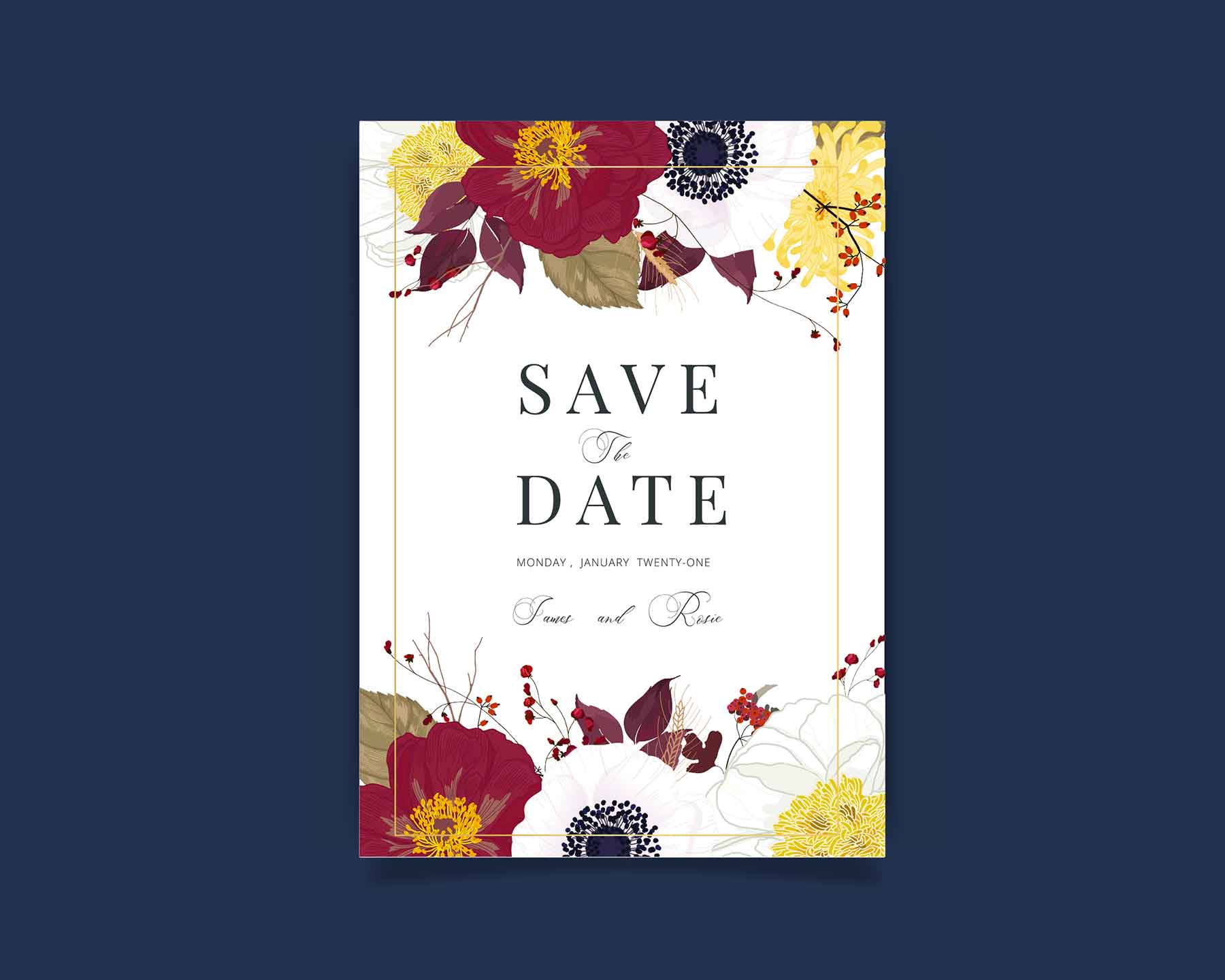
Floral save the dates announce your wedding date with flower artwork as the centerpiece, from watercolor peonies and wildflower meadows to dark moody blooms and modern line art. On Joy, every floral design works as a printed card or a digital save the date with RSVP tracking, plus a matching wedding website in the same design.
What Makes a Save the Date Floral
A floral save the date is one where flowers are the subject of the artwork, not a supporting detail. The blooms carry the design: they frame the names, anchor the corners, or fill the whole card face. That is what separates a true floral from a card that simply happens to include a leaf or two on its way to the text.
Floral vs. Botanical: Where the Line Sits
Floral and botanical get used interchangeably, but they describe different priorities. Floral designs lead with blooms: peonies, roses, tulips, the flowers themselves. Botanical designs lead with leaves and greenery, with flowers playing a minor role or sitting out entirely. Many cards blend both, but the subject of the artwork is what defines the style. If your eye lands on the blossoms first, it is floral. If it lands on trailing eucalyptus or palm fronds, you are in botanical territory, which is its own search.
The Flowers You Will See
Certain blooms show up again and again because each carries a mood people recognize instantly:
- Peonies: lush and romantic, the classic wedding flower in soft pink and cream.
- Roses: formal and traditional, especially in garden-style compositions.
- Wildflowers: loose, colorful meadow mixes that read casual and outdoor.
- Cherry blossoms: delicate branches tied to spring and to Japanese floral tradition.
- Sunflowers: golden and rustic, made for late summer and fall country weddings.
- Lavender: calm purple sprigs with a relaxed, countryside feel.
You do not need to identify the exact flower on a card to choose well. What matters is the overall effect: structured or loose, light or dark, soft or graphic. The sections below make that concrete with real designs.
12 Floral Save the Date Designs We Love
These twelve designs span the full floral spectrum: classic watercolor gardens, romantic blush, wildflower meadows, rustic sunflowers, dark moody blooms, modern line art, vintage porcelain-style patterns, cherry blossom branches, verified foil finishes, and citrus-bright country palettes. Every one is available as a printed card or a digital save the date, and each links to its own page where you can personalize the details.

Elegant Flowers
A classic watercolor garden bouquet in red, pink, and green on a clean white field. This is the anchor pick for traditional romantic weddings: the composition is structured enough for a formal venue, but the hand-painted quality keeps it warm rather than stiff. It also carries well across spring and summer dates without feeling tied to one season.

Fresh Bouquet II
A fresh-picked bouquet treatment with a softer, more just-gathered feel than a structured garden arrangement. It suits couples who want romance without formality: backyard ceremonies, vineyard weekends, intimate celebrations where the flowers look like they came from a market that morning. A gentle counterpoint to the more composed watercolor designs on this list.

Navy and Blush
Watercolor blush blooms set against deep navy, a palette that bridges romantic pink and formal dark. It works in nearly any season, which makes it a strong pick for couples who know they want flowers but have not settled the rest of their palette. The contrast also keeps names and dates highly readable, which matters at save-the-date size.

Meadow
A bright multicolor wildflower meadow in full bloom, loose and cheerful rather than arranged. This is the pick for casual outdoor weddings: barn venues, festival-style weekends, backyard ceremonies, anywhere the dress code runs toward sundresses and linen. The saturated color mix reads clearly at a glance and sets an instantly relaxed tone.

Sunflowers
Golden sunflowers on cream, unmistakably rustic and made for late summer into fall. If your date lands between August and October and the venue involves wood, fields, or open sky, this is one of the most direct style matches you can make. The warm yellow palette also photographs well for couples adding a photo to the card.

Citron
Yellow and green florals with a citrus-bright energy, a deliberate break from the pink-heavy end of the floral world. It suits country-summer weddings, daytime garden parties, and couples whose palette leans chartreuse, lemon, and leafy green rather than blush. A cheerful option that still reads as wedding stationery, not novelty.

Peony Woodcut Modern
A peony rendered as modern woodcut line art in pink, graphic and minimal where the watercolor picks are soft and painterly. Choose this when you want the flower motif without any sweetness: it pairs naturally with modern venues, art-forward weddings, and clean typography elsewhere in your stationery. The crisp edges also print beautifully.

Charlotte
Blue-and-white vintage florals with a formal, porcelain-inspired feel, the kind of pattern you would expect on heirloom china. It is a natural fit for classic, Southern-traditional, and estate-venue weddings, and the restrained two-color palette keeps it timeless rather than trendy. If your invitations will be engraved or letterpress in feel, start here.

Cherry Blossoms Pink
Delicate watercolor cherry blossom branches, airy and light, with deep roots in Japanese floral tradition where the blossom stands for renewal and the fleeting beauty of a season. The obvious match is an early-spring wedding, but the motif works for any couple honoring that heritage. The open, branchy composition leaves generous space for your names.

Lush Magenta
Dark watercolor florals in magenta, purple, and black, the moody end of the floral spectrum. This is the pick for evening ceremonies, winter weddings, and couples who want drama rather than sweetness. Deep blooms on a dark ground feel luxurious and a little theatrical, and they pair naturally with candlelit venues and rich textures like velvet.

Maison Foil
Vintage blue floral elegance finished in a real foil treatment, which catches the light and immediately signals formality. This is the statement pick for black-tie and evening weddings where the stationery should feel like an occasion on its own. Because the foil is part of the finish, the design reads as refined rather than flashy.

Storybook
Whimsical illustrated florals in pink and blue with a fairytale-garden mood, playful without tipping into childish. It suits couples who want their stationery to feel like the opening page of a story: garden venues, secret-garden themes, celebrations with a little magic built in. A charming close to the spectrum, opposite the structured formality of the vintage picks.
How to Choose a Floral Style for Your Wedding
With twelve directions on the table, the fastest way to narrow down is to start from your wedding itself, not the cards. Three questions do most of the work: what season are you marrying in, how formal is the event, and do you want soft or graphic artwork?
Match the Blooms to the Season
The same floral motif can read as spring, summer, fall, or winter depending on the bloom and the palette. Spring calls for cherry blossoms, tulips, and soft pastels. Summer suits loose garden mixes and bright wildflowers. Fall leans into sunflowers, marigolds, and warm golden tones. Winter works best with deep jewel-toned blooms on dark backgrounds, or blue-and-white patterns that feel crisp and formal.
This is guidance, not law. A sunflower design at a June wedding is not wrong; it just plants a specific expectation in guests’ minds. If your wedding has a strong seasonal identity, letting the save the date confirm it makes everything that follows feel cohesive.
Light and Airy vs. Dark and Moody
Most floral save the dates fall into one of two atmospheric camps. Light and airy designs use white or cream grounds, watercolor washes, and plenty of breathing room; they read as daytime, garden, spring, and romantic. Dark and moody designs put saturated blooms against navy, black, or deep green grounds; they read as evening, winter, formal, and dramatic.
Neither is more wedding-appropriate. The right answer usually matches the venue and the time of day. A candlelit winter ceremony in a historic hall pairs beautifully with dark florals, while a midday garden ceremony almost always wants the lighter treatment.
Classic, Vintage, or Modern Line Art
The last fork is treatment. Classic watercolor florals are the broadest category and the safest: hand-painted blooms that suit nearly any wedding. Vintage treatments, like toile-style patterns and porcelain-inspired blues, carry a sense of heritage and pair well with traditional venues and formal dress codes. Modern line art and woodcut styles strip the flower down to its graphic essentials, which suits contemporary spaces and couples who find watercolor too soft.
If you are torn between two, hold them against your invitation plans. The save the date arrives months before the invitation, but guests remember the first card, and the second should feel like a continuation, not a correction.
When to Send Save the Dates
The standard window is six to eight months before the wedding. That gives guests time to request time off, arrange travel, and budget, without the card arriving so early that it gets forgotten.
Push the timeline earlier in two situations. For destination weddings, where nearly every guest needs flights and hotels, aim for eight to twelve months out. The same applies to holiday weekends and peak-season dates, when travel books up fast and guests may be choosing between competing plans.
A few timing notes specific to floral designs and paper logistics:
- Printed cards need production time. Order early enough to allow for printing, addressing, and mailing, so the cards actually land in the six-to-eight-month window rather than leaving your hands then.
- Your guest list must be real. Everyone who receives a save the date must also receive an invitation, so only send to people you are certain about.
- Seasonal florals have no deadline of their own. Floral designs work in every season, so timing depends on your date and your guests’ travel plans, not the artwork.
- Digital sending buys flexibility. If addresses are still trickling in, a digital save the date can go out on the early end while printed cards follow for family and anyone who values paper.
Matching Invitations, Websites, and More
Your save the dates do not have to match your invitations exactly, but keeping the same design family makes the whole stationery set feel intentional rather than assembled. When the floral on the save the date reappears on the invitation months later, guests register it as a thread, and the wedding starts to feel like a designed event long before the day itself.
The simplest path is to stay within one design across formats. You can browse the floral wedding invitations to find the invitation counterpart to the style you choose here, often the same artwork in invitation form. Because floral is a color-led style, your wedding website design can match the palette too: pink for the romantic and cherry blossom picks, with green as the natural direction for greenery-led and citrus palettes.
The payoff of carrying one design from card to website is cumulative. The save the date introduces the motif, the website reinforces it every time a guest checks details, the invitation confirms it, and the day-of stationery closes the loop. Done consistently, a single floral design quietly organizes your entire visual identity.
From Save the Date to RSVP in One Place
The save the date is not just an announcement; it is the first step of guest communication, and the months between it and the wedding are exactly when logistics get messy. Setting up that flow early saves real effort later.
Sending digitally is the flexible option. Every floral design in this article is available as a printed card and as a digital save the date, and many couples split the list: printed cards for family and anyone who keeps stationery, digital for international guests and friends who live on email. The design stays identical either way, so nobody gets a lesser version.
The bigger advantage of digital is what happens next. A digital save the date can point guests straight to your wedding website, where RSVP tracking, schedules, hotel blocks, and travel details live. Because the wedding website can carry the same floral design, guests move from card to site without a visual break, and responses start collecting in one place instead of across texts and calls.
Address collection matters more at this stage than most couples expect. The save-the-date moment is usually when the guest list is still being built, and tracking down addresses is the slow part. Tools that let you request addresses from guests directly, rather than hunting them one by one, turn a spreadsheet chore into a single shared link. By the time invitations go out, the list is complete and responses are already organized.
FAQ
When should I send floral save the dates?
Send save the dates six to eight months before the wedding, and up to a year ahead for destination weddings or holiday weekends. Floral designs work in every season, so timing depends on your date and guest travel plans, not the artwork.
What should I include on a floral save the date?
Your names, the wedding date, the city or venue, and your wedding website URL. The website carries details that can change, like hotel blocks and schedules, so the card stays simple and lets the floral artwork lead. Formal invitations follow later.
Do my save the dates have to match my wedding invitations?
They do not have to match exactly, but keeping the same design family makes the whole stationery set feel intentional. Joy carries the same floral designs across save the dates, invitations, and wedding websites, so matching is the default, not extra work.
Can I send floral save the dates digitally?
Yes. Joy offers floral designs as printed cards and as digital save the dates with online RSVP tracking. Digital sending works well for international guests and for couples still collecting addresses, since Joy can gather guest addresses for you.
What floral style fits a formal wedding?
Look for structured compositions and richer palettes: classic garden florals on cream, blue-and-white porcelain-inspired patterns, or deep blooms on dark backgrounds. A foil finish, where offered, adds formality. Loose watercolor wildflowers read more casual by comparison.
Explore More Floral Save the Dates
These twelve designs cover the major directions, but they are a starting point, not the whole garden. Single-bloom collections, photo cards with floral frames, greenery-led botanical styles, and more vintage and moody options are all waiting in the full collection.
Browse the complete floral save the date collection to compare palettes side by side, filter by the season and formality you have in mind, and personalize any design with your names, date, and wedding website. Whether you land on soft watercolor peonies or a dark bouquet for a winter evening, the right floral is the one that already looks like your wedding.
